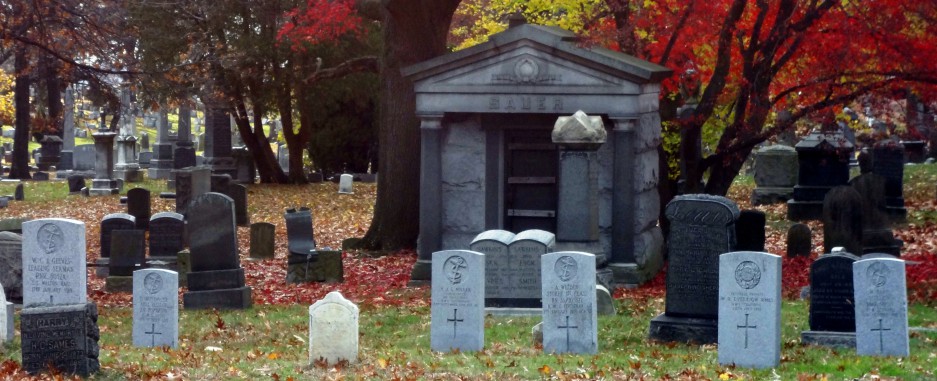
Private Samuel Barnett

This is part of a series of essays about the First World War casualties commemorated by the Commonwealth War Graves Commission in New York.
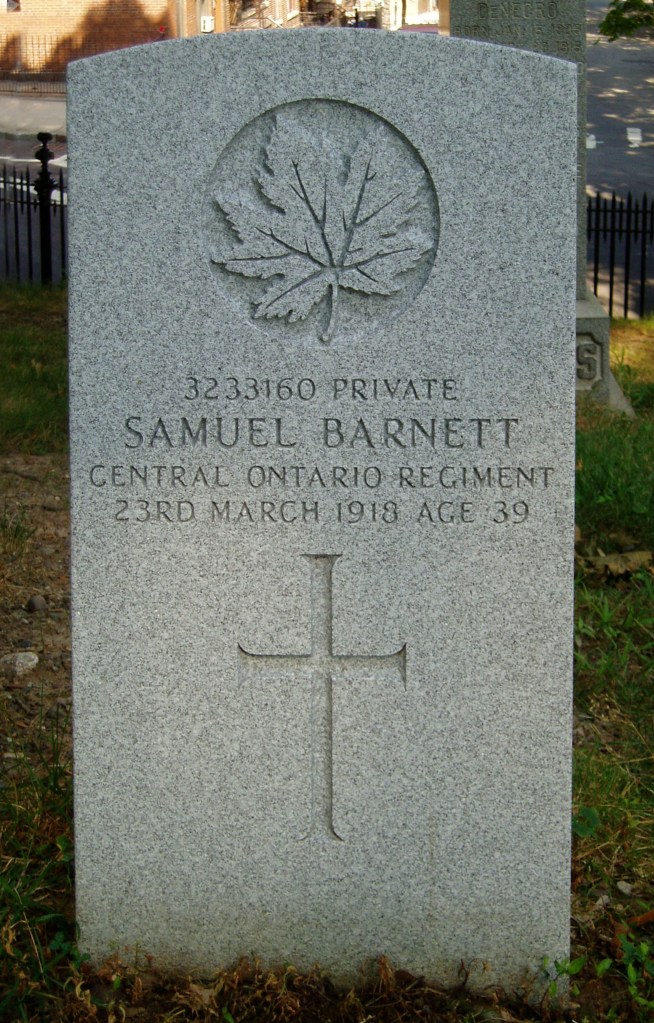
The grave of Private Samuel Barnett

Samuel Barnett was born on 18 February 1879 in Belfast, Ireland, the eldest of the two sons of Matthew and Matilda Barnett.[1] He was a shipping clerk in Belfast before he emigrated to the United States in 1901 with his mother and his younger brother, Matthew. They lived on Fifth Avenue, Brooklyn, a block from the Empire State Building; Samuel worked in New York as an underwriter.

On 11 February 1918 in New York he was examined and found fit for service with the Canadian Expeditionary Force and on 18 March he travelled by train via Niagara Falls to Toronto where he was attested and joined the 2nd Depot Battalion, 1st Central Ontario Regiment at Exhibition Camp; he was allocated the regimental number 3233160.

Although seemingly fit when he underwent his initial medical examination, from the time of his arrival in Toronto he felt under the weather and on 20 March he was sick in the cookhouse. He was taken to the hospital at Exhibition Camp in the early evening. There he was diagnosed as suffering from influenza and he soon developed pneumonia; he died of heart failure at 11.30pm on 23 March 1918. His body was returned home and he was buried in Greenwood Cemetery, Brooklyn, on the northern side of the cemetery near the junction of 7th Avenue and 22nd Street, in Section J, Lot 33488. His mother and his brother are buried with him; their grave is unmarked. He is one of two First World War CWGC burials in that cemetery—the other is Cadet L H Thompson, Royal Air Force, who died on 30 October 1918.

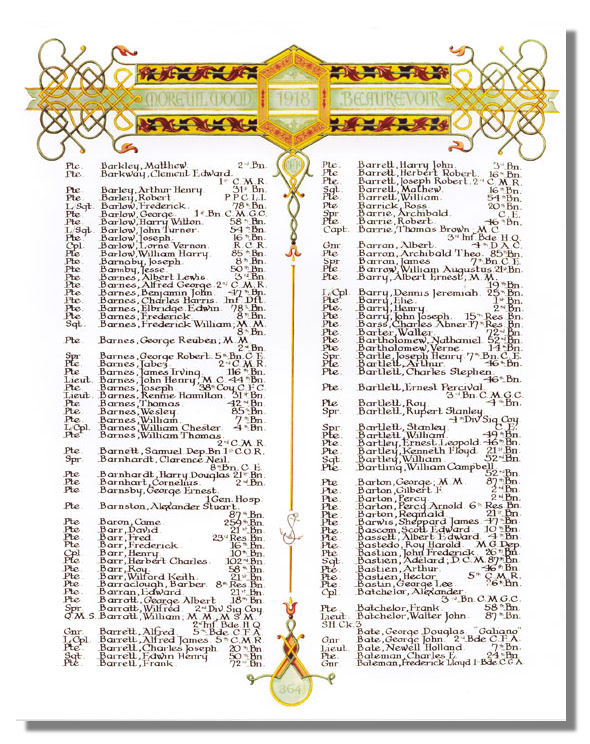
Private Samuel Barnett is commemorated on page 364 of the Canadian First World War Book of Remembrance; that page is displayed on 10 August. His father received his Memorial Plaque and Scroll.
Acknowledgement:
The War Graves Photographic Project for the photo of Samuel Barnett’s grave.


1. (Back) Matthew Barnett (1849-7 November 1927) married Matilda Brown (1848-23 July 1911) at Malone Presbyterian Church in Belfast on 12 April 1871. They had two children who died as infants before Samuel was born in 1879. Matthew Barnett Sr. died in Belfast and is buried in Belfast City Cemetery. Matthew Barnett Jr. (28 January 1887-22 April 1949).
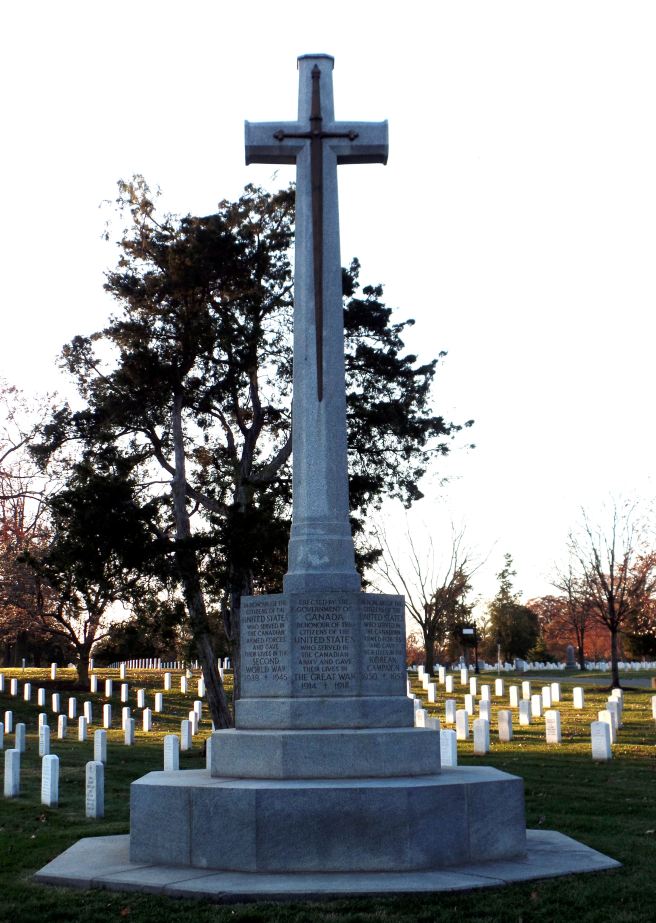
The Canadian Cross of Sacrifice at Arlington National Cemetery

And the last land he found, it was fair and level ground
About a carven stone,
And a stark Sword brooding on the bosom of the Cross
Where high and low are one.

Canadian Cross of Sacrifice, Arlington National Cemetery

Rudyard Kipling’s verse from The King’s Pilgrimage—the visit of King George V to war cemeteries in France and Flanders in 1922—highlights three iconic aspects of the commemoration of the war dead of the two world wars by the Commonwealth War Graves Commission.[1] Firstly, the huge Stone of Remembrance in the larger cemeteries—the ‘great war stone’ was designed by Sir Edwin Lutyens to be abstract and to avoid association with any particular religion. Secondly, and in contrast, the elegant Cross of Sacrifice designed by Sir Reginald Blomfield. Finally, the equality of treatment for all war dead regardless of rank, nationality, creed or race.

In the United States there are no Stones of Remembrance. There are, however, two Crosses of Sacrifice. The cross is in all CWGC cemeteries where there are more than 40 war graves, which explains its presence in Oakwood Cemetery Annexe in Montgomery, Alabama. There are 78 graves from the Second World War in the cemetery, all airmen who died during training.

The other cross is in Arlington National Cemetery. There are only 32 graves in Arlington and that cross serves another purpose. It is a memorial, specifically to the citizens of the United States who gave their lives while serving in the armed forces of Canada in the First and Second World Wars and in Korea. Continue reading

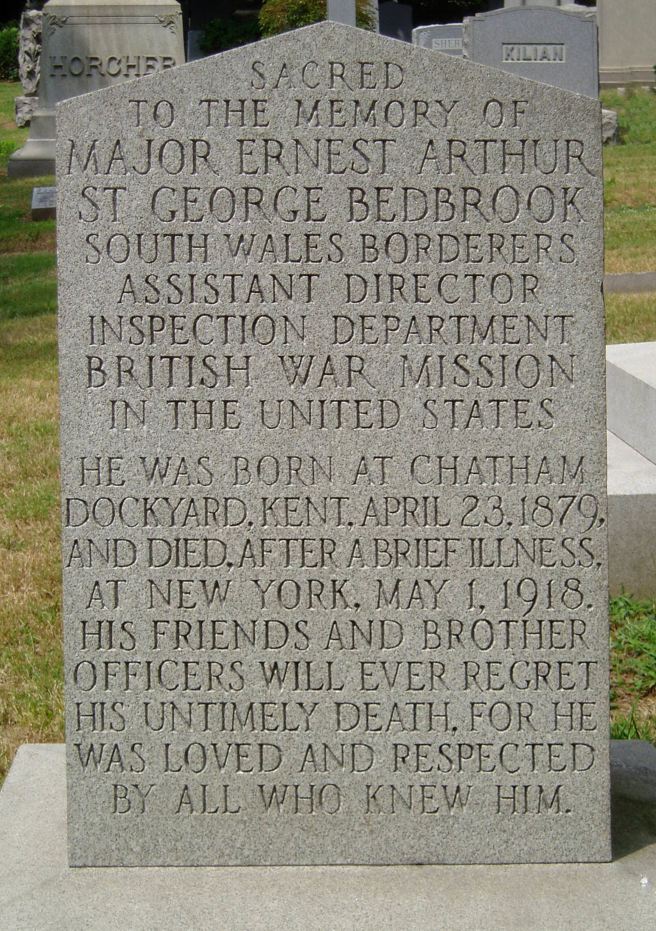
Major Ernest Arthur St George Bedbrook

This is part of a series of essays about the First World War casualties commemorated by the Commonwealth War Graves Commission in New York.

The Grave of Major Ernest Bedbrook

Ernest Arthur St George Bedbrook was born at Chatham Dockyard in Kent on 23 April 1879, the seventh of the 10 children of James and Matilda Bedbrook.[1] His father became ‘Chief Inspector of Machinery in Her Majesty’s Fleet’ in the rank of Engineer Rear Admiral..

Educated at St. George’s College, Wimbledon, he became a civil engineer and joined the Civil Engineering Department of the Admiralty and later London County Council; in the latter appointment he was involved in the design of Greenwich generating station. He then worked for Messrs. Rendel & Robertson, Consulting Engineers for the India Office,[2] and was European representative of the Pennsylvania-based Midvale Steel Co.

Continue reading

Cadet Samuel Walter Arnheim

This is part of a series of essays about the First World War casualties commemorated by the Commonwealth War Graves Commission in New York.

When deeds of valor are done on the battlefield
we do not look to see whether a man is Jew, Protestant or Catholic…’‘ [1]

Major General John F. O’Ryan[2]

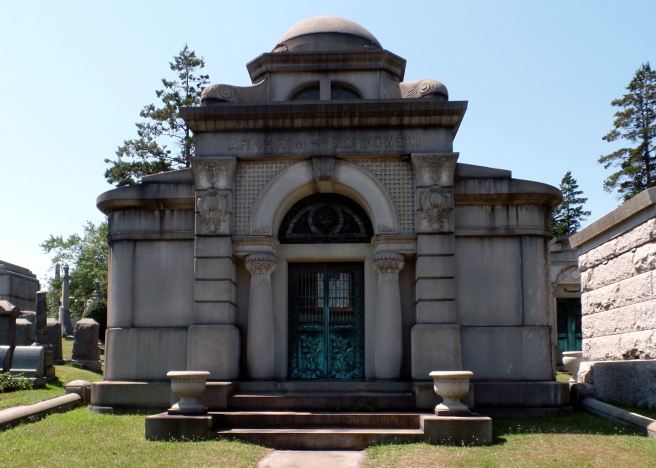
The Arnheim-Zorkowski Mausoleum in Beth Olam Cemetery
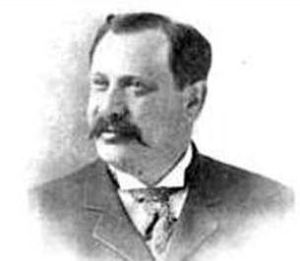
Marks Arnheim
Marks Arnheim

Samuel Walter Arnheim was born in New York on 21 April 1889 into a wealthy Jewish family, the only son and youngest of the three children of Marks and Fannie Arnheim.[3] His father was born in Berlin and had arrived in the United States as a child. He travelled the United States and the West as a young man before returning to New York, where he established a tailoring business in 1877 in ‘Little Germany’ in the Bowery. He became a US citizen in 1881. The business flourished and in 1892 he moved to a large building on the corner of Broadway and Ninth Street; it became one of the most prominent tailors in the city and during the war, in addition to high quality men’s suits, made uniforms for Army and Navy officers. Samuel’s mother, from Connecticut, also had a German father.

Continue reading

Private Thomas Camp

This is part of a series of three essays about the First World War casualties commemorated by the Commonwealth War Graves Commission in Tennessee.

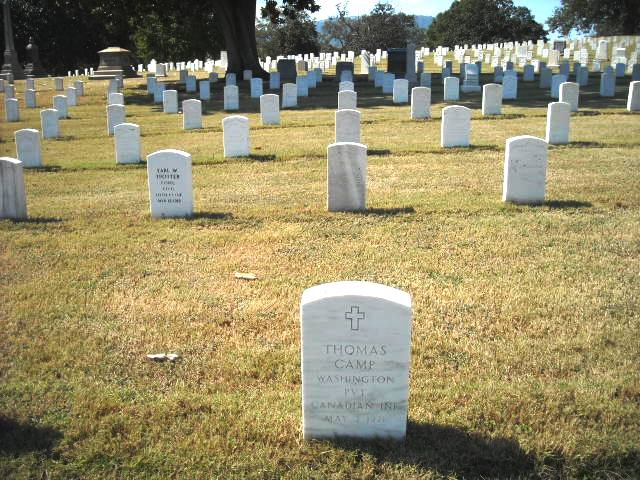
The grave of Private Thomas Camp in Chattanooga National Cemetery

Thomas Camp was an American of British descent born at Madisonville, Tennessee on 24 January 1896, the son of Charlie and Sallie (née Arp) Camp.[1] Little is known of his wider family but he worked as a baker and lived in Shooks Gap, a small settlement south-east of Knoxville.

He enlisted at Montreal on 6 February 1918 for service with the Canadian Expeditionary Force and joined the 1st Depot Battalion, Quebec Regiment, where he was allocated the number 3081869. Camp’s early service was spent in hospital until 15 May, when he was posted to Valcartier, the site of the largest training camp in Canada, to be employed as a baker.

Continue reading

Sapper Lee Arvel Moss

This is part of a series of three essays about the First World War casualties commemorated by the Commonwealth War Graves Commission in Tennessee.

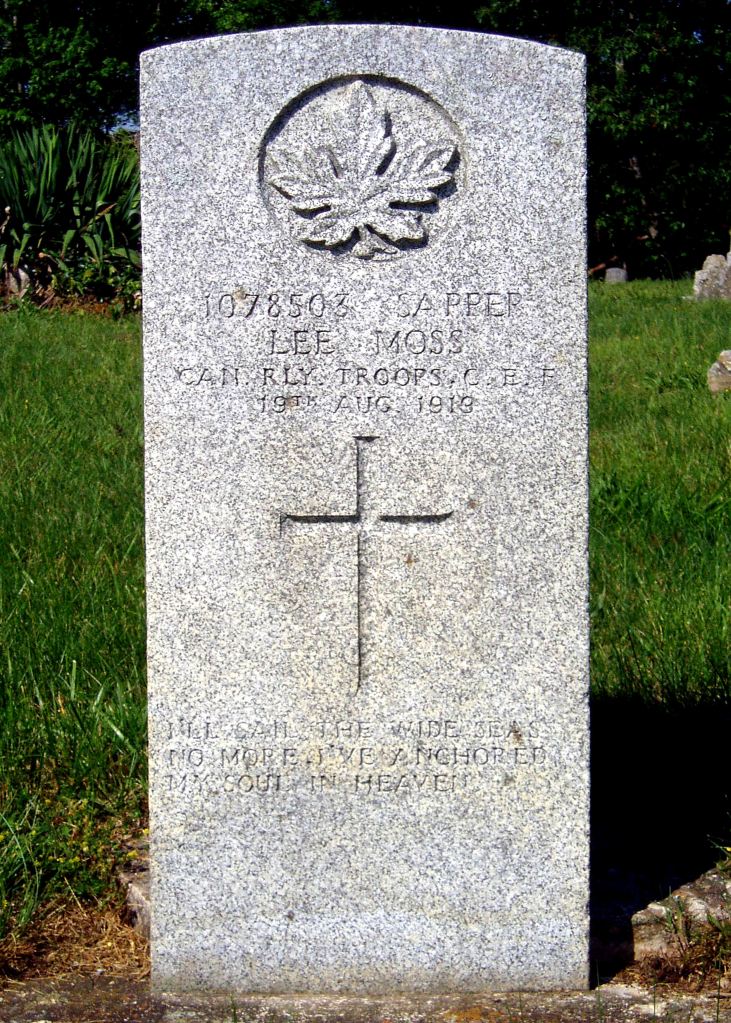
The grave of Private Lee Moss

Lee Arvel Moss was born at Vigor, a community near Athens, in McMinn County, Tennessee on 4 March 1887, the second of the five children and eldest son of Hugh and Cammie Moss.[1]

At the time of his enlistment he was living in Montreal and, although a blacksmith by trade, he was working as a steam fitter. He was a member of the Militia, serving with 4th Field Company, Canadian Engineers. He enlisted on 10 August 1916 for service with the 5th Pioneer Battalion, giving his year of birth as 1883, and was allocated the regimental number 1078503.

Continue reading

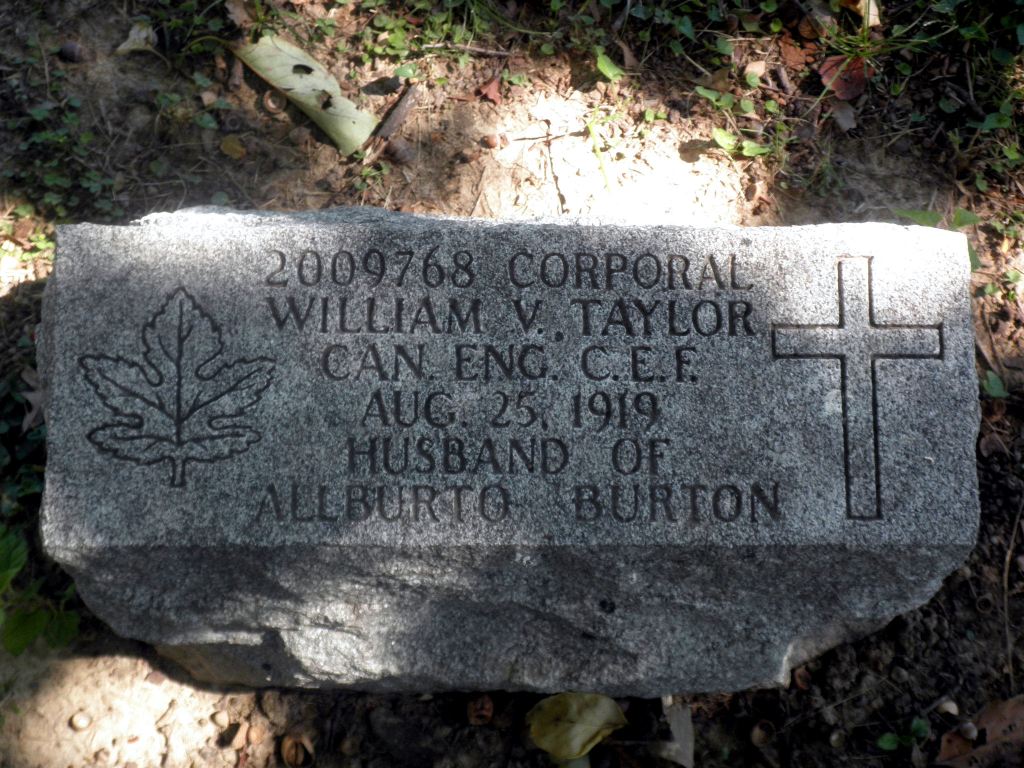
Corporal William Vannah Taylor

This is part of a series of three essays about the First World War casualties commemorated by the Commonwealth War Graves Commission in Tennessee.

The grave of Corporal William Vannah Taylor

William Vannah Taylor IV was born on 4 December 1875 in Louisiana, the eldest of the six children of William Vannah Taylor III, a doctor (later the first mayor of the newly incorporated town of Olla, Louisiana) and Sarah Francis Davis.[1] Although he came from a long line of physicians—the previous four generations had produced doctors; his grandfather had served with the United States Navy as an Assistant Surgeon in the War of 1812—William V. Taylor IV entered the real estate business.

Continue reading

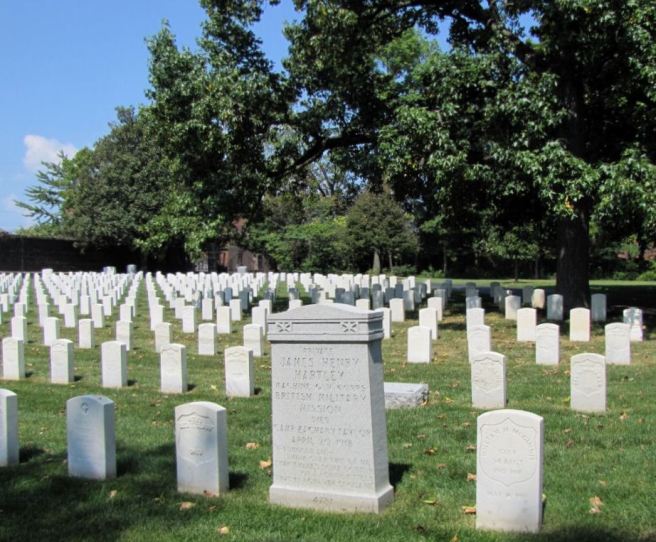
Private James Henry Hartley

This is one of two essays about the First World War casualties commemorated by the Commonwealth War Graves Commission in Kentucky.

The grave of Private James Henry Hartley

Private James Hartley was one of the first men to join the newly formed Machine Gun Corps in the autumn of 1915. He was one of 79 men from The King’s (Liverpool Regiment) who formed the basis of 46th Company. By the end of the war a quarter—Hartley and 18 others—were dead.

Continue reading

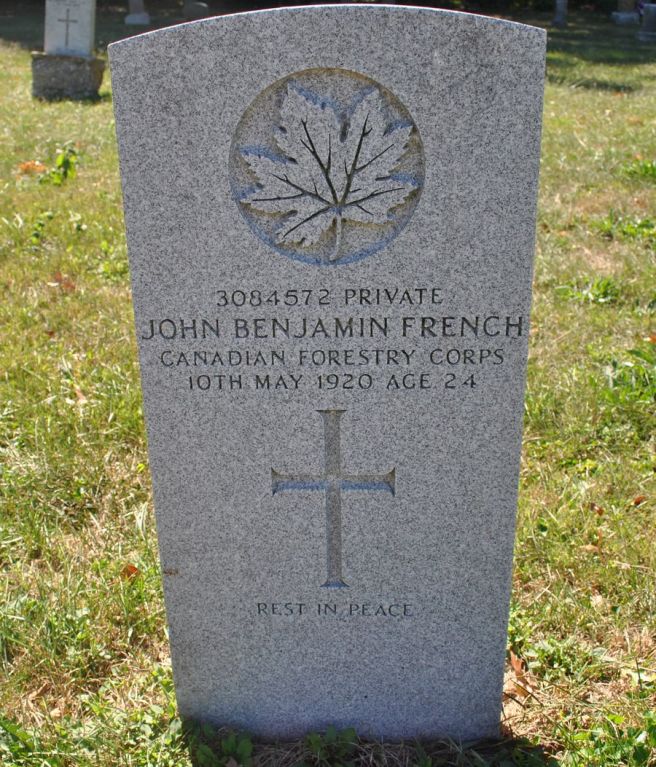
Private John Benjamin French

This is one of two essays about the First World War casualties commemorated by the Commonwealth War Graves Commission in Kentucky.

The grave of Private John Benjamin French - note the second, original gravestone behind
The grave of Private John Benjamin French – note the original gravestone behind

John Benjamin French was an African-American born on 22 July 1896 in Lexington, Kentucky, the son of Ash and Lula French of 325 Race Street.[1] Little is known of his family but John French was working as a ‘shoe shiner and jockey ’ when he enlisted in 1918.

Continue reading

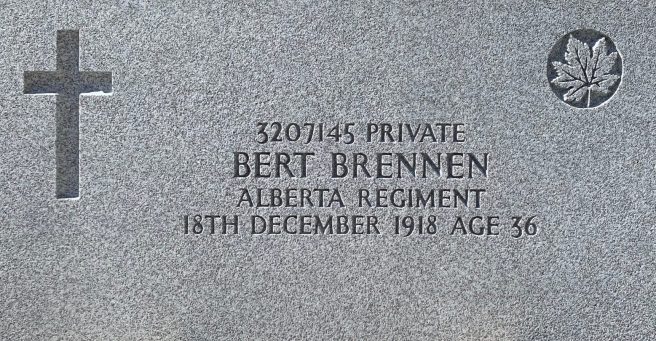
Private Bert Lancelot Brennen

This essay is about the single First World War casualty commemorated by the Commonwealth War Graves Commission in Oregon.

The new grave marker for Private Bert Brennen

Private Bert Brennen was an American of Irish descent—he hailed from Detroit, Michigan, where he was born on 24 March 1882. Little is known of his parents, wider family or his early life but by the time he enlisted in 1918 he was working as a motor mechanic in Barons, Alberta.[1] While living in Barons, he became engaged to Helena W. Comstock, a California-born chiropractor.[2]

Bert Brennen was not conscripted—he enlisted into the Canadian Expeditionary Force at Calgary, Alberta on 23 May 1918. He joined the 1st Depot Battalion, Alberta Regiment and was allocated the number 3207145. He had recently suffered from pneumonia and he was placed in medical category ‘C3’—defined as being fit only for sedentary duties at home.

Continue reading