This is part of a series of essays about the First World War casualties commemorated by the Commonwealth War Graves Commission in Pennsylvania.
Ernest Thomas McVicker
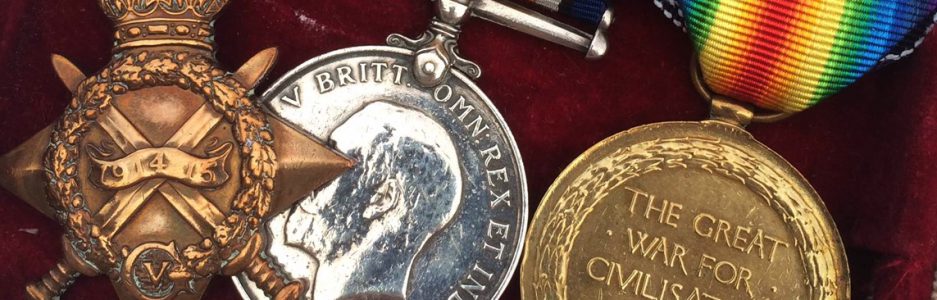
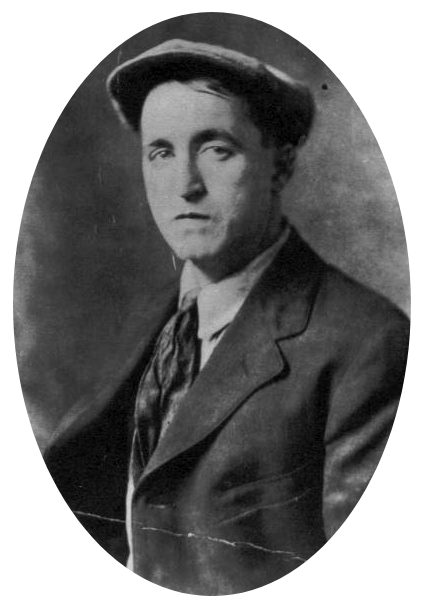
Born in Hanley in the Staffordshire Potteries on 4 November 1884, Ernest McVicker emigrated to the United States with his parents around 1887.[1] He grew up in Pittsburgh, where his siblings were born and where he went to work in the glass industry; he was a member of the American Flint Glass Workers Union.
This is part of a series of essays about the First World War casualties commemorated by the Commonwealth War Graves Commission in Pennsylvania.
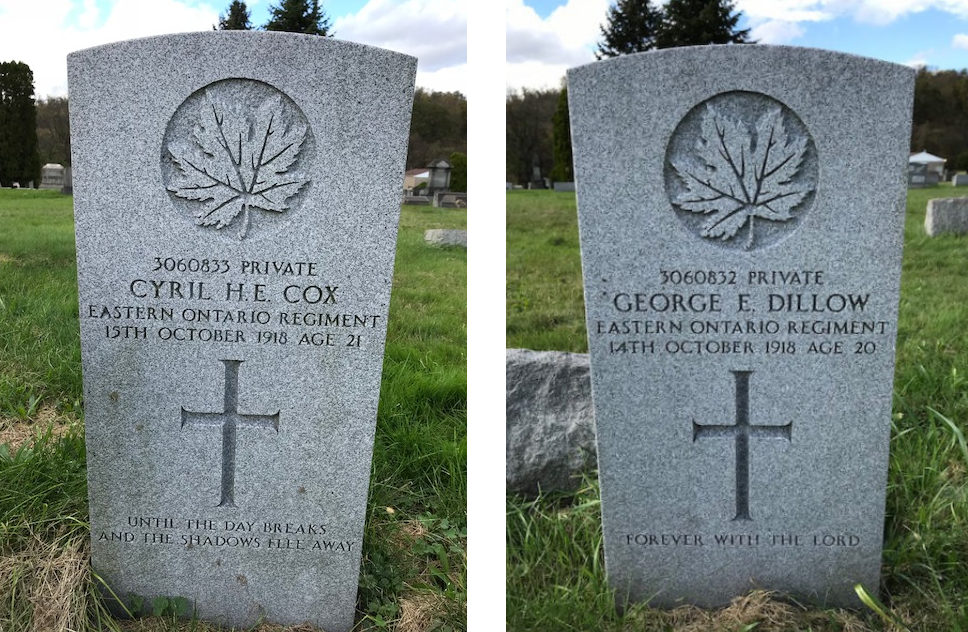
The graves of Cyril Cox and George Dillow
This is the tragic story of two young cousins, born in England but who grew up together in Mckeesport, Pennsylvania and who died within 24 hours of each other during the influenza pandemic.
This is part of a series of essays about the First World War casualties commemorated by the Commonwealth War Graves Commission in Indiana.
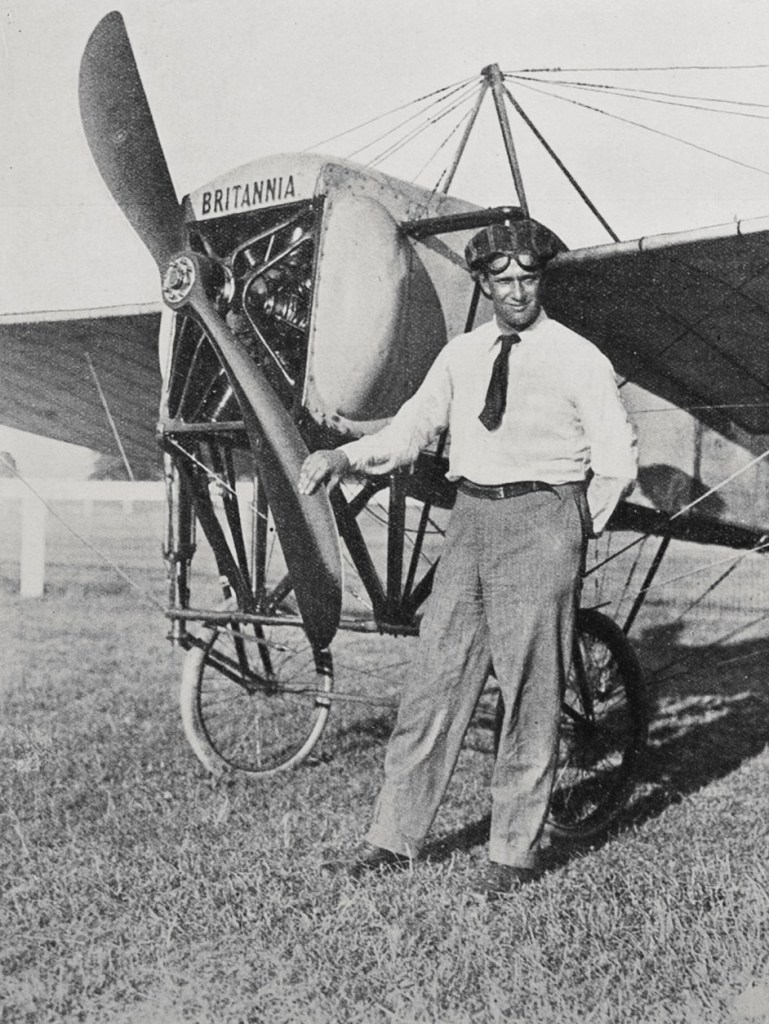
Joe Hammond and ‘Britannia’, a Bleriot XI-2 in New Zealand, January 1914
Joe Hammond was a pioneering aviator. Amongst his ‘firsts’ were: first New Zealander to gain a Royal Aero Club certificate (no. 32), pilot of the first aircraft to fly in Western Australia, and the first cross-country flight in Australia. At the time of his death he had reputedly accumulated (although unverified) about 6,000 flying hours.
Joseph Joel ‘Joe’ Hammond was born on 19 July 1886 at Feilding in the Manawatu district on North Island, New Zealand.[1] He attended Campbell Street School in Palmerston North and St Patrick’s College, Wellington. Prior to the start of his flying career, Hammond travelled and worked intermittently in Australia, Alaska, the United States, and Europe. While in Seaford in East Sussex, Hammond met Ethelwyn Wilkinson, the daughter of a well-to-do local builder, and they were married on 19 November 1909.[2] Shortly afterwards in France Hammond began to learn to fly and qualified for Aero Club de France Certificate No. 258[3] in a Sánchez Besa biplane on 4 October 1910. He qualified for Royal Aero Club Certificate No. 32 on 22 November 1910, flying a Bristol Boxkite on Salisbury Plain.
This is part of a series of essays about the First World War casualties commemorated by the Commonwealth War Graves Commission in Ohio.
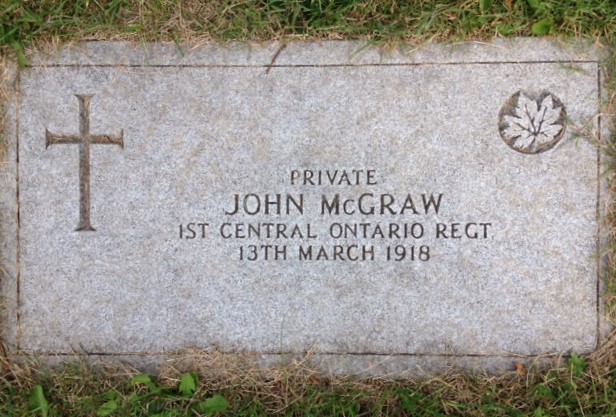
The grave of Private John McGraw
John McGraw, a married man, enlisted in the United States, probably in Chicago, for service with the Canadian Expeditionary Force and travelled to Toronto to join the 1st Depot Battalion, Central Ontario Regiment. Immediately upon his arrival in Toronto on 20 February 1918, prior being attested and taken on strength or allocated a regimental number, he was admitted to the Base Hospital suffering from paratyphoid bronchitis.[1] He died from heart failure on 13 March 1918, aged 37.
His body was returned to the United States and he was buried in Calvary Cemetery, Cleveland on 18 March. His grave, in Section 42, Lot 237, is in the north-west part of the cemetery near the entrance and is marked by a flat Commonwealth War Graves Commission marker. He is one of two casualties in this cemetery: See Private Sam Corrodo.
This is part of a series of essays about the First World War casualties commemorated by the Commonwealth War Graves Commission in Ohio.
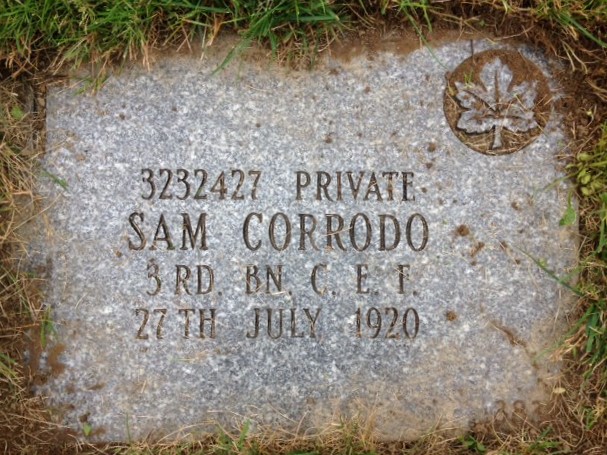
The grave of Private Sam Corrodo
Sam Corrodo was born on 15 April 1897 in Oriolo, Calabria, Italy, the son of George and Carmela Corrodo [also spelled Corrado].[1] His father, a tailor, arrived in the United States in 1901 and the family followed between 1907 and 1909. While his parents and three brothers remained in New York, Sam Corrodo moved to Chicago where he worked as a floor-layer.
He enlisted on 27 February 1918 in Chicago (he stated that he was a Canadian by birth) before travelling to Toronto to join the 2nd Depot Battalion, 1st Central Ontario Regiment for training as an infantryman; he was allocated the number 3232427.
This is part of a series of essays about the First World War casualties commemorated by the Commonwealth War Graves Commission in Ohio.
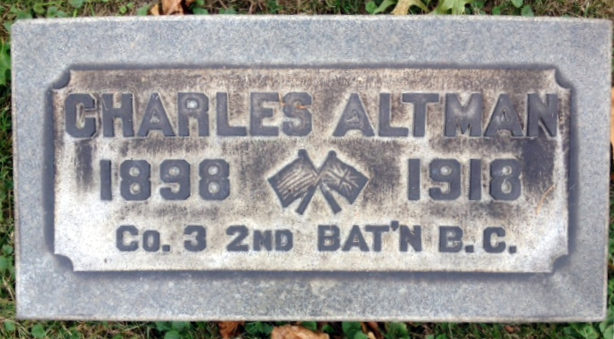
The grave of Private Charles Altman
Charles Altman was born in Rhode Island on 15 July 1898 into a Jewish family of German extraction. His father, Philip, who had served for six months during the Spanish-American War, was from New York and had German parents, and his mother, Sadie, had been born in Germany.[1] In 1901, Charles Altman’s younger sister was born and sometime before 1910 the family moved to Cleveland, where his father worked for a clothing manufacturer. He later started his own business in Canton. While the family business remained in Canton, the family spent some time in California and Arizona, probably related Charles Altman’s bouts of bronchitis and pneumonia.
Altman enlisted for service with the Canadian Expeditionary Force on 5 January 1918 at Victoria in British Columbia and was taken on strength of the 2nd Depot Battalion, British Columbia Regiment. He was allocated the number 2138060.
During his training at Willows Camp, Private Altman first reported sick on 11 March. On 11 April he fell ill again and was diagnosed with influenza and bronchitis, and possibly tuberculosis, and transferred to the Jubilee Section, Victoria Military Hospital where tuberculosis was confirmed. It then became apparent that he had suffered previous bouts of similar illness. He refused treatment in a sanatorium in Canada, instead electing to travel to Arizona with his parents. In consequence of his illness he was medically downgraded. Before he was discharged from hospital he was scheduled for an operation. On the night of 17 July he was prepared for surgery and, on account of his chest condition, chloroform was administered as an anaesthetic. Almost immediately he began to display the symptoms of chloroform poisoning. Attempts at resuscitation failed and he died at 11.15 pm. His body was returned home and buried in the Mayfield Cemetery, Cleveland. His grave is in Section 12, Lot 18, Grave 2, on the south-eastern edge of the cemetery.
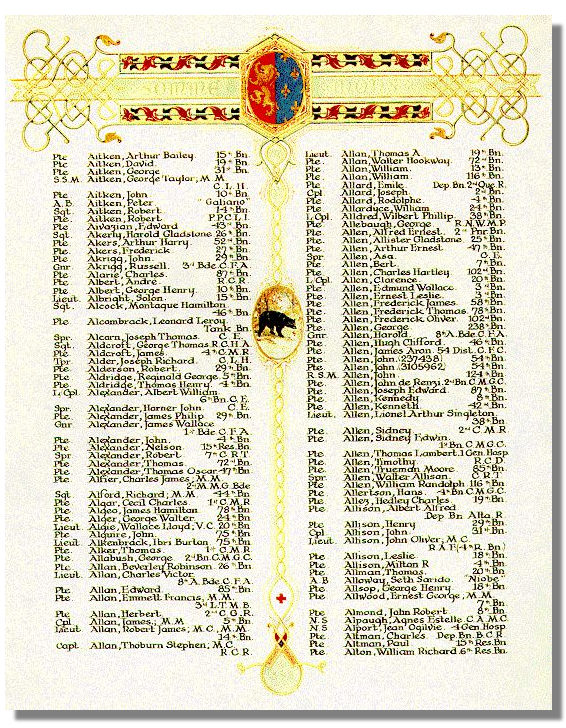
The Canadian Book of Remembrance showing the entry for Private Charles Altman
Private Altman is commemorated on page 358 of the Canadian First World War Book of Remembrance; that page is displayed on 6 & 7 August. Having served only in Canada he was not entitled to any war medals. The memorial plaque and scroll were sent to parents and his mother received the Memorial Cross.
Acknowledgement: Chris Dubbs, Patricia Dubbs, Pamelia Williams, and Frank Holowach for their efforts to visit and photograph the graves in Ohio and western Pennsylvania.
The grave of Private Charles AltmanThe Canadian Book of Remembrance showing the entry for Private Charles Altman
1. (Back) The details of Altman’s family are difficult to confirm. Philip Altman (17 June 1882-5 December 1954) married Sadie A. Nuddleman (23 February 1882-October 1963) on 15 February 1906 in Rhode Island: Florence R. (1901-NK); Dorothy Caroline (later Hiney) (12 July 1916-16 November 1978).
This is part of a series of essays about the First World War casualties commemorated by the Commonwealth War Graves Commission in New York.
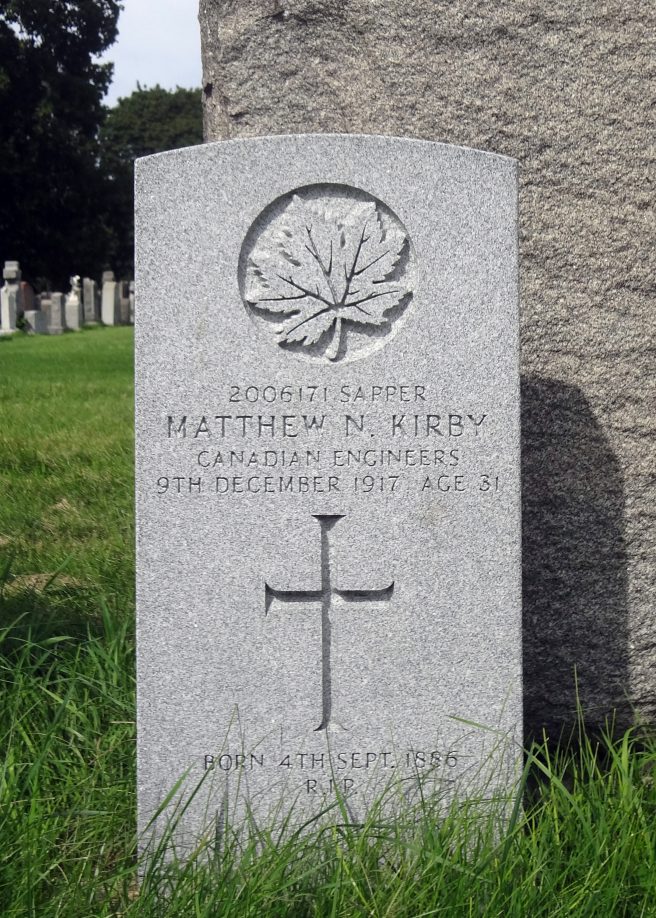
The grave of Sapper Matthew Neal Kirby
Matthew Kirby was born in Sunderland, England on 4 September 1886, the only son and fourth of the five children of Matthew and Alice Kirby.[1] His father was a seaman (and member of the Royal Naval Reserve). Kirby became a house painter and by 1911 he was living and working in Harrogate. In the third quarter of 1911, Kirby married Mary Ann McCoy in Sunderland.[2]
In 1912 or 1913 Kirby emigrated to the United States; he was followed on 27 October 1913 by his wife. The couple lived at 546 West 132nd Street in Upper Manhattan, New York City and Kirby found work as a painter, although he found himself unemployed in 1917, which may have prompted his enlistment.
This is part of a series of essays about the First World War casualties commemorated by the Commonwealth War Graves Commission in New York.
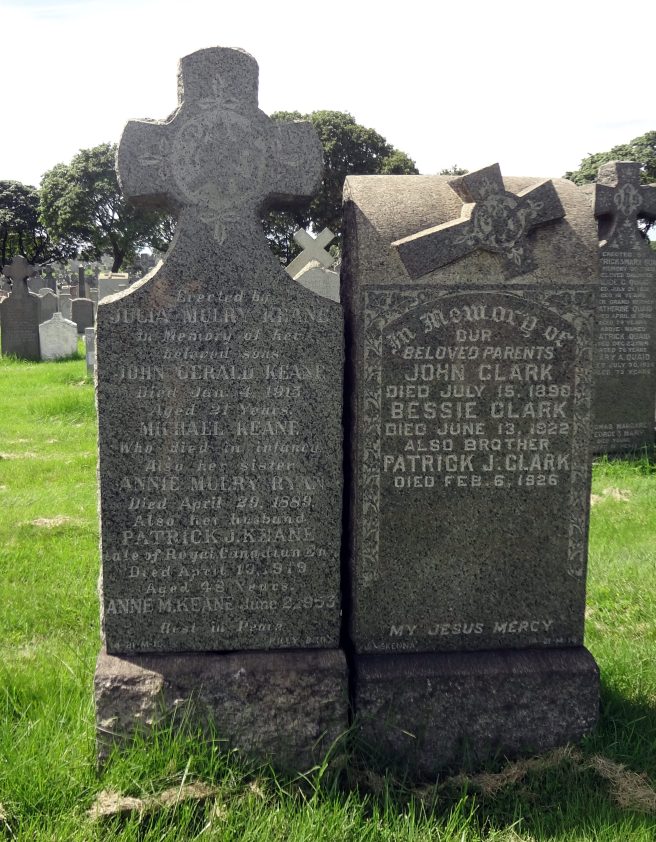
The grave of Sapper Patrick Keane
Patrick Keane was born about 1868 at Tarbert, a small town in County Kerry, Ireland alongside the Shannon estuary. He emigrated to the United States around 1888 and settled in New York, where he worked as a boatman and stevedore.
At the Church of the Holy Cross in New York City, on 19 October 1890, Keane married Julia Mulry, who was also an Irish immigrant. The couple had eight children, two of whom died in infancy and another died before Keane enlisted.[1] The family lived in Astoria, near Bowery Bay.
In New York on 24 July 1917, Keane enlisted for service with the Corps of Royal Engineers, and travelled to England.
This is part of a series of essays about the First World War casualties commemorated by the Commonwealth War Graves Commission in New York.
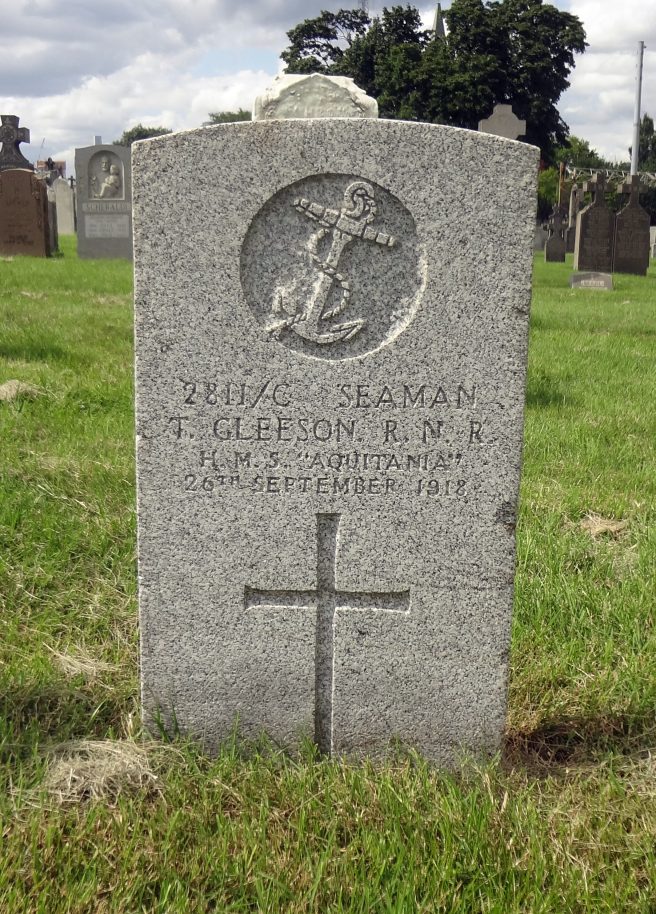
The grave of Seaman Thomas Gleeson
Thomas Gleeson was a fisherman from County Limerick and a long-serving sailor of the Royal Naval Reserve who was mobilised for service in 1914; he served as a gunner on various ships until he died just before the war ended.
Gleeson’s service records indicate that he was born on 3 January 1872 in County Limerick. His actual birth was, in fact, a little over a year earlier, on 1 December 1870; one of the eight children of John and Kate Gleeson.[1] The family lived in the north of Limerick city and, like his father, Thomas Gleeson became a fisherman on the River Shannon.
This is part of a series of essays about the First World War casualties commemorated by the Commonwealth War Graves Commission in New York.
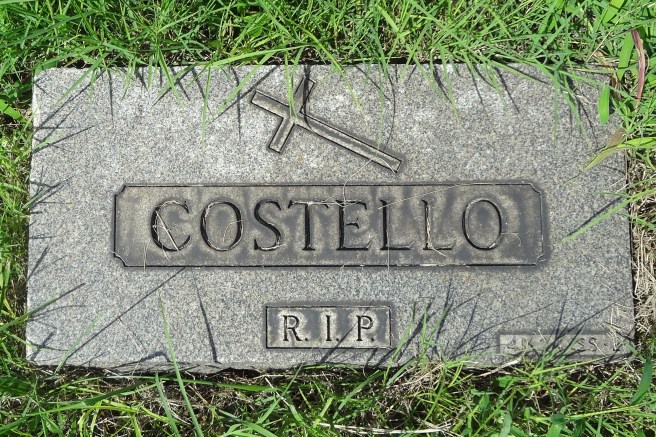
The grave of Sapper John Costello
John Costello was working as a carpenter when he enlisted on 20 May 1918 in New York; after which he travelled north to Canada and joined the Canadian Engineers Training Depot at Saint-Jean-sur-Richelieu. Allocated the number 2010335, Sapper Costello began his training but in June was diagnosed as suffering from a heart complaint. He was posted to No. 6 Engineer Depot in Halifax, Nova Scotia in September and he remained there in the Works Section until he was discharged as unfit for military service due to his heart condition on 15 April 1919.
 Sacrifice