Private Laughlin Black

This is part of a series of essays about the First World War casualties commemorated by the Commonwealth War Graves Commission in Massachusetts.

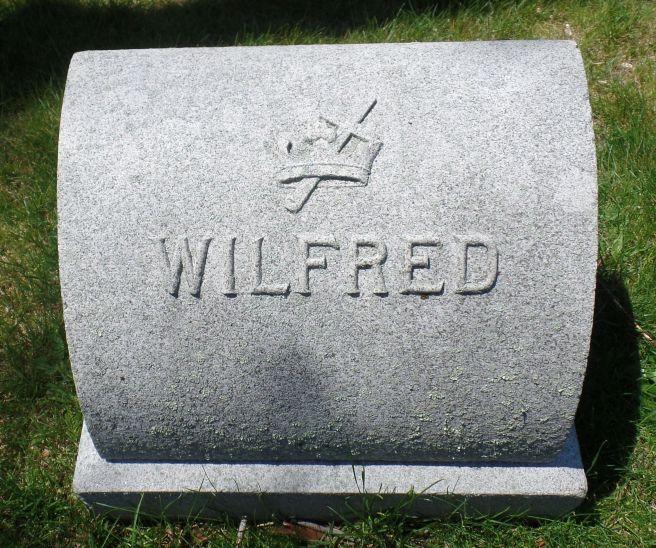
The grave of Private Laughlin Black

Laughlin Black was born on 20 September 1876 at Darlington, a hamlet near Hunter River, Prince Edward Island, Nova Scotia, the son of Albert and Annie Black.[1] His parents were both immigrants to the United States—his father from Scotland and his mother from Prince Edward Island; his parents had married in Maine some years before. After his birth, they moved to Sommerville, Massachusetts. Laughlin Black either remained with his mother’s family or returned to Prince Edward Island sometime in his youth, before rejoining his family in Sommerville in 1889. Like his father he became a house painter.

Continue reading
Private William Francis Bent

This is part of a series of essays about the First World War casualties commemorated by the Commonwealth War Graves Commission in Massachusetts.

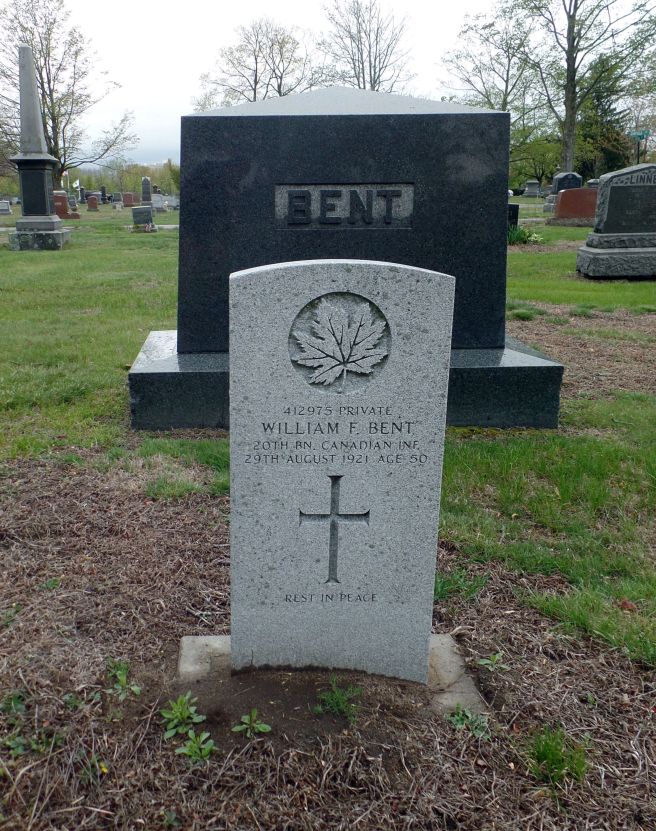
The Bent family plot

William Bent was a tragic figure, whose war was not how he later made it out to be, and who took his own life some years after he returned home.

William Francis Bent was born on 27 July 1872 in West Hartford, Vermont, the youngest of the three children of Charles and Mary Bent.[1] His father, a Civil War veteran, was a shoemaker but William Bent and his brother George were mechanically minded and both went to work in the early automobile industry. In 1892 his mother died of pneumonia and ten years later his father shot himself with his pistol.

Continue reading

Serjeant Malcolm MacFarlane

This is part of a series of essays about the First World War casualties commemorated by the Commonwealth War Graves Commission in Pennsylvania.

Serjeant Malcolm MacFarlane

Serjeant Malcolm MacFarlane died during the influenza pandemic while serving in Philadelphia with the British and Canadian Recruiting Mission.

He was born on 20 June 1889 at Newington in Edinburgh, the youngest of the six children of James and Janet MacFarlane.[1] The family had lived in Linlithgow, where James MacFarlane worked as a grocer and where the first five children were born, before moving to Newington sometime in the 1880s. His father found work there as a stationary steam engine driver and when Malcolm left school, he went to work as a graphical draughtsman for the well-known cartographers John Bartholomew & Son Ltd.

Continue reading

Private Grant Edward Freye

This is part of a series of essays about the First World War casualties commemorated by the Commonwealth War Graves Commission in Pennsylvania.

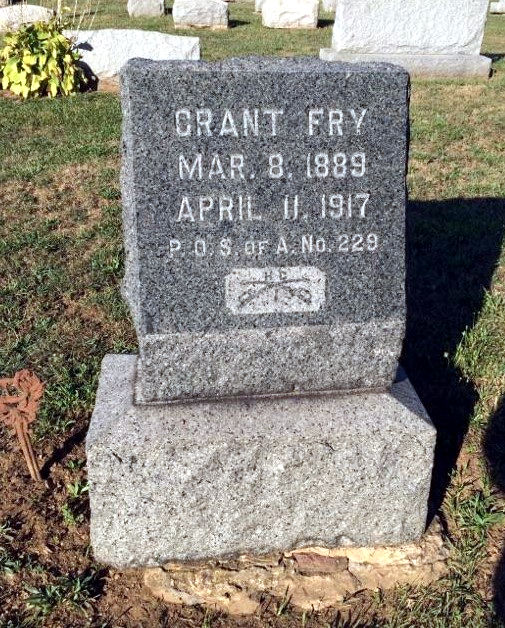
The grave of Grant Edward Freye

Private Freye posed something of a conundrum given the variations of his age and name that appear in his service and other records and on his grave stone. He did not serve for long, only 2½ months, before he succumbed to the severe effects of appendicitis, aged only 17.

The name under which he served was a variation of the spelling of his family name. Early records show the name as ‘Fry’, later his mother and father used the name ‘Frey’. He also gave false details upon enlistment for his date of birth—common for those underage.

Continue reading

Second Lieutenant George Albert Ruffridge

This is part of a series of essays about the First World War casualties commemorated by the Commonwealth War Graves Commission in New Jersey.

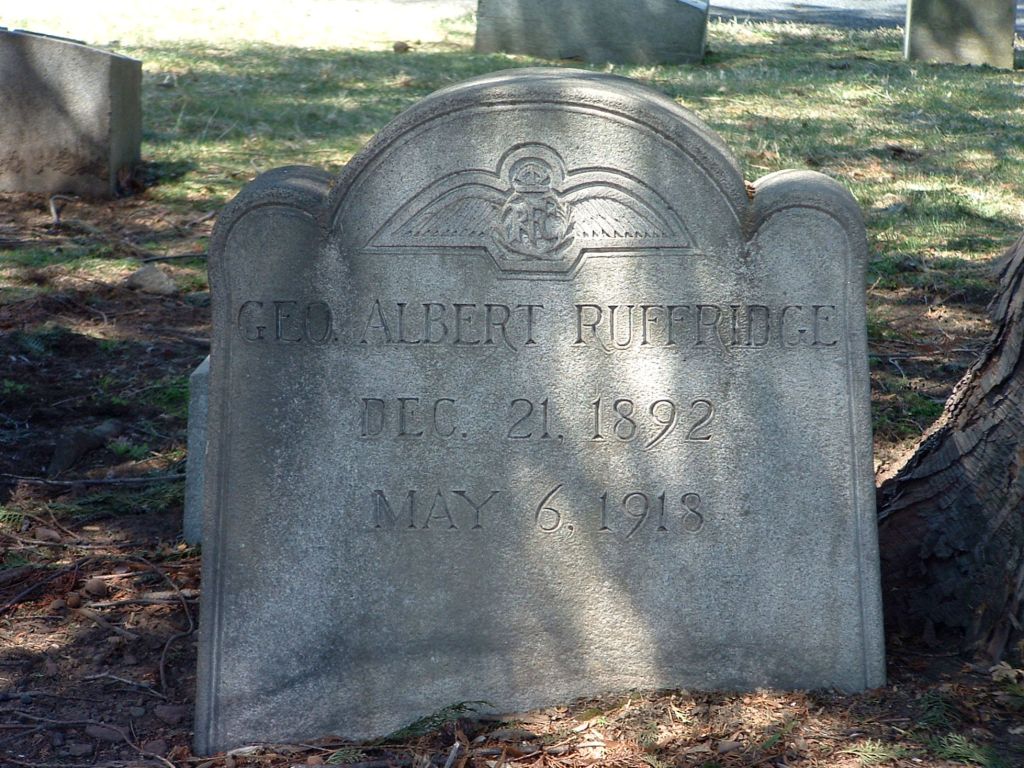
The grave of Albert Ruffridge

George Albert Ruffridge (known as Albert) was born on 21 December 1892 in Cleveland, Ohio. He was the second of the two sons of George and Hattie Ruffridge who moved with the family to Montclair, New Jersey sometime in the first decade of the new century.[1]

Like his father, Ruffridge worked as a salesman before he enlisted in Toronto on 21 November 1917 into the Royal Flying Corps for training as a pilot (152810 Cadet). After completing his initial training in Toronto and Texas, he was commissioned as a Second Lieutenant on 6 April 1918, five days after the formation of the Royal Air Force, and joined No. 80 Canadian Training Squadron at Camp Bordon to complete his gunnery training.

Continue reading

Private Lawrence Eugene Manning

This essay is about the single First World War casualty commemorated by the Commonwealth War Graves Commission in Utah.

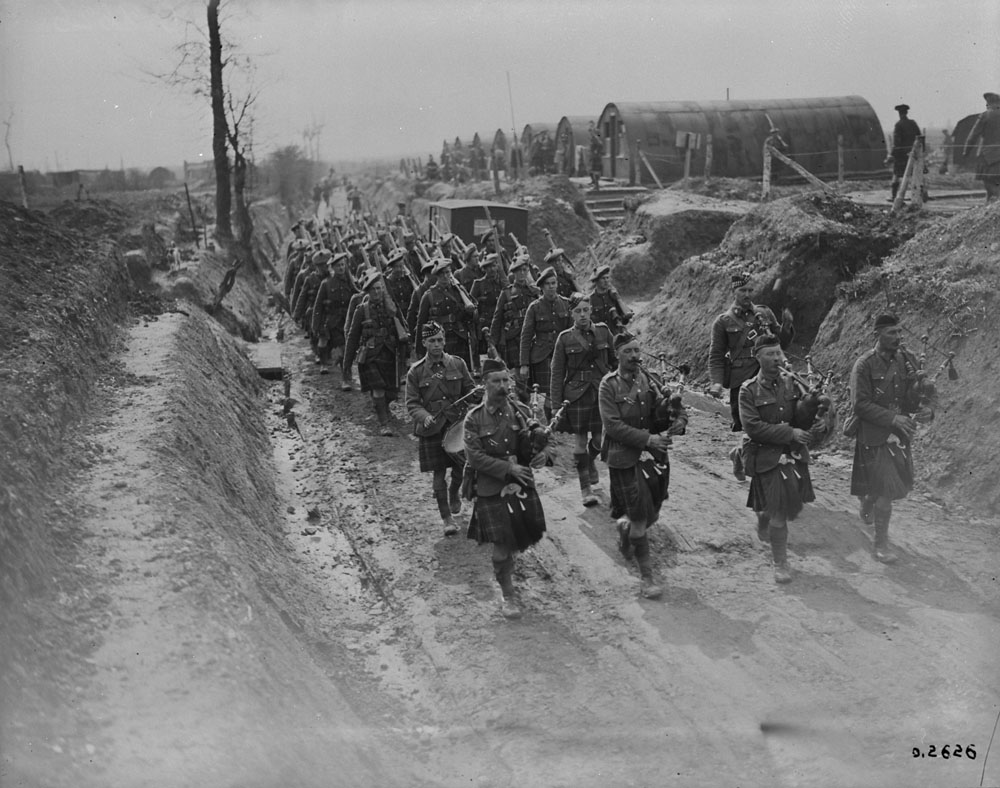
72nd Canadian Infantry Battalion (Seaforth Highlanders of Canada), May 1918

Lawrence Manning served in France with 72nd Canadian Infantry Battalion (Seaforth Highlanders of Canada), taking part in its final actions in late 1918. Greatly affected by his experiences, he took his own life after he returned to Utah after the war.

Continue reading

Private Chester Covell Buck

This is part of a series of essays about the First World War casualties commemorated by the Commonwealth War Graves Commission in Indiana.

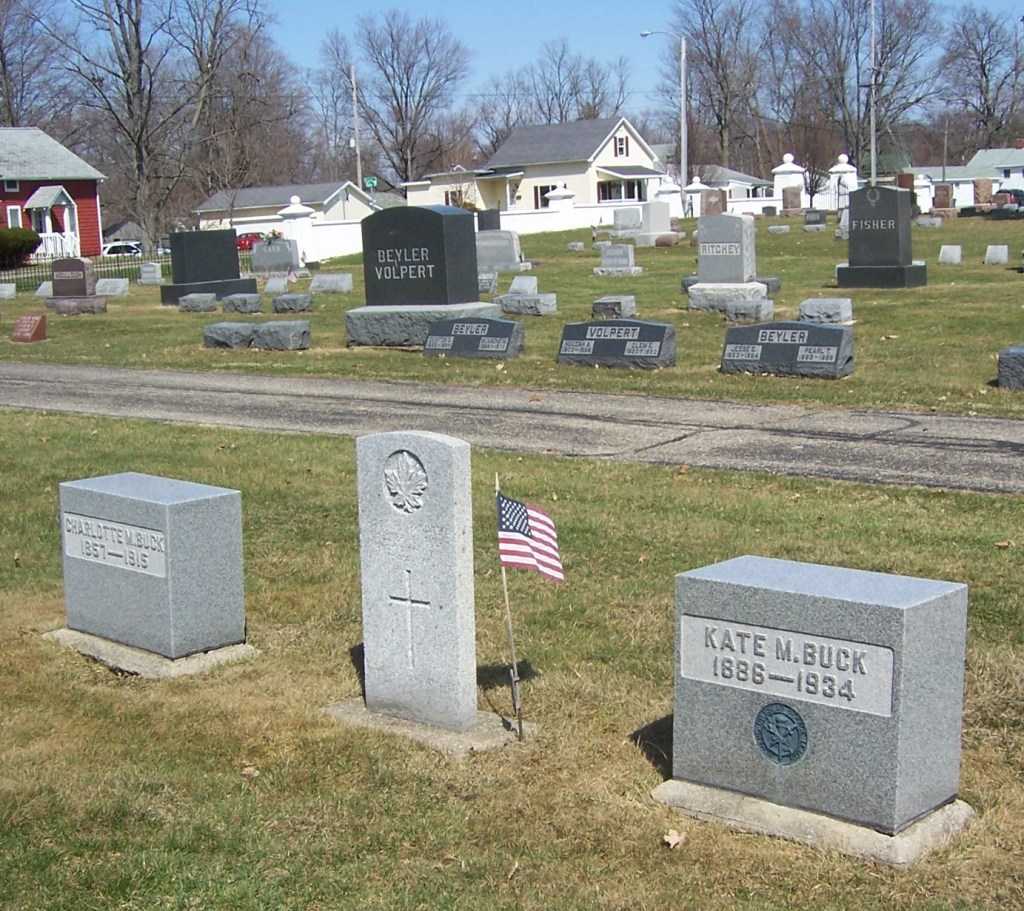
The Buck family plot

Chester Buck provides another example of a man enlisted for service with the Canadian Expeditionary Force who probably should have been turned away. Diagnosed as suffering from the effects of late-stage syphilis after arriving in England, he returned to Canada but died in Alberta soon after his arrival.

Continue reading

2016 Project Roundup

Amongst the aims of the project are a check of the accuracy of the details displayed on the headstones and the online commemorations by the Commonwealth War Graves Commission. The Commission has been very supportive of the project and it is appropriate to highlight the successes thus far.

Of the five cases submitted, four were actioned without question and one remains in adjudication—a brief description of the corrected error appears at the beginning of each story, which may be found at the links below.

Leading Seaman Sam Gordon Wills

Fireman Low On

Private Bert Lancelot Brennen

Leading Seaman Peter Beatty

The case still being reviewed is that of Private Harry Ross, whose real name is believed to be Fooksman.

In addition, Southampton City Council has acknowledged the error on the city’s war memorial in relation to Private Joseph Henry Wosikowski. Disappointingly, the error was not corrected due to a shortage of money. It is hoped that a series of additions and amendments to the memorial will be made before Remembrance Day 2018.

Next month we will submit a series of new cases, most comprising minor errors, and we hope that 2017 will see equal success, including some new commemorations.

Cadet Wilfred Cecil Alcock

This is part of a series of essays about the First World War casualties commemorated by the Commonwealth War Graves Commission in Massachusetts.

The grave of Wilfred Cecil Alcock
Newspaper report

The weekend of 24 November 1917 saw a series of accidents at the training airfields that made up Camp Taliaferro near Fort Worth in Texas. The newspapers of the day carried lured stories of multiple fatalities and mortally wounded aviators (see the linked example) but the truth is somewhat simpler to recount. On Saturday 24 November Cadet Wilfred Alcock crashed into the undercarriage of another Curtis JN4 flying in formation and was killed instantly. The other pilot, Royal Flying Corps Cadet James Harold Thompson, crash landed and was injured but recovered. Another crash involving Cadet Eric Biddle was not the fatal event that the newspapers reported, and neither was that of Cadet Brailey Gish, although they were injured. A second fatality occurred on Monday 26 November when newly commissioned Second Lieutenant Frank Park Mathews fell in his aircraft from 2,500 feet. Only Alcock was British; Thompson was born in Canada but lived in the United States and Biddle, Gish and Mathews were Americans, the latter two being pilots of the Aviation Section, United States Army Signal Corps.[1]

Continue reading

Lance Corporal Laurent Gilbert Narcisse Stuart

This is part of a series of essays about the First World War casualties commemorated by the Commonwealth War Graves Commission in New Hampshire.

The grave of Lance Corporal Laurent Stuart

Laurent Stuart, and his twin brother Leonel, were born on 22 March 1895[1] at L’Ange-Gardien, Rouville, in southern Quebec, the son of Théode and Odile Stuart.[2] The family emigrated to the United States in 1906 and settled in Manchester, New Hampshire. His father owned a grocery store and most of the children worked for one of Manchester’s shoe manufacturers.

Laurent Stuart travelled to Canada and enlisted on 29 September 1914. He joined the 12th Battalion (22793, Private) and sailed for England two days later, on the SS Scotian, arriving on 14 October.[3] The Battalion was broken up to provide reinforcement drafts.

Private Stuart was posted to 1st Divisional Cyclist Company at Bulford, with which he went to France in February 1915.

Continue reading