This essay is about the single First World War casualty commemorated by the Commonwealth War Graves Commission in Hawaii.
The grave of Engineer Sub-Lieutenant John Gemmell
Engineer Sub-Lieutenant John Gemmell is the most westerly of the First World War casualties commemorated by the Commonwealth War Graves Commission in the United States. He died of pneumonia in Hawaii and is buried in O’ahu Cemetery.
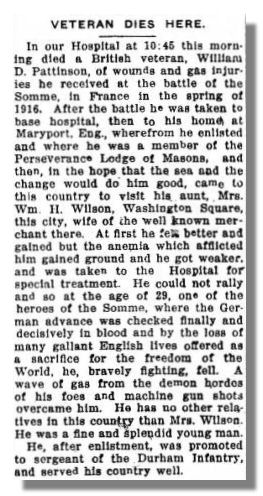
The death of Sergeant William Pattinson in Hagerstown, Maryland was brought to our attention by Jill Craig of Western Maryland Regional Library. The notification of his death, published in the Hagerstown Daily Mail, was found during research for a project about Western Maryland during the war. He is not commemorated by the Commonwealth War Graves Commission—a case will be made for his death to be recognised as attributable to his war service.
William Pattinson was born on 21 January 1889, in the village of Crosscanonby in Cumberland, the eldest son and eldest of the five children of James and Margaret Ann Pattinson.[1] His mother worked as a milliner in his father’s drapery business.
This is part of a series of essays about the First World War casualties commemorated by the Commonwealth War Graves Commission in Louisiana.
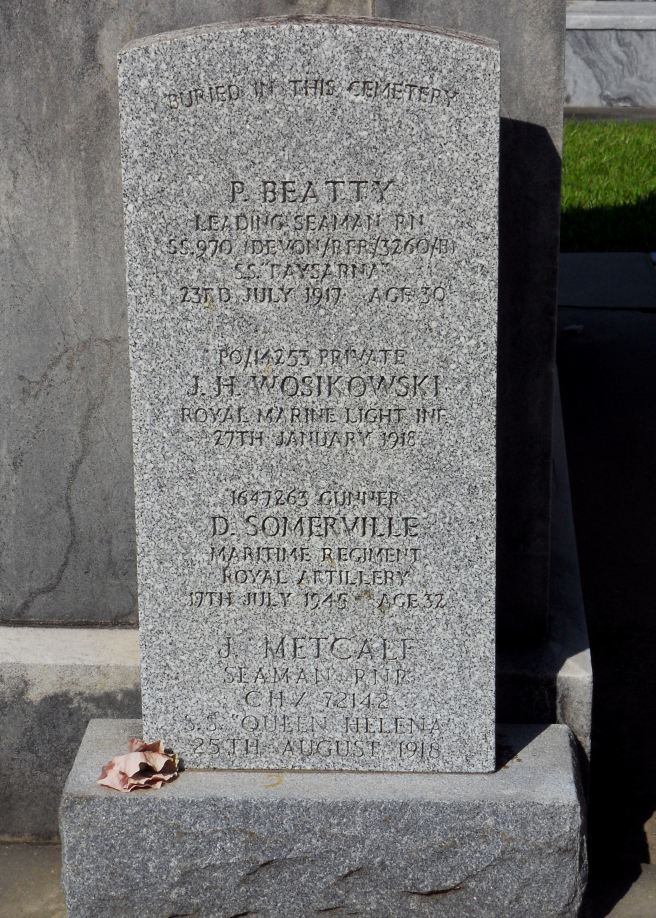
Editor’s Note: Some details about Leading Seaman Beatty were incorrectly recorded by the CWGC. His online record now reflects his correct date of death, service and ship and his gravestone will be replaced.
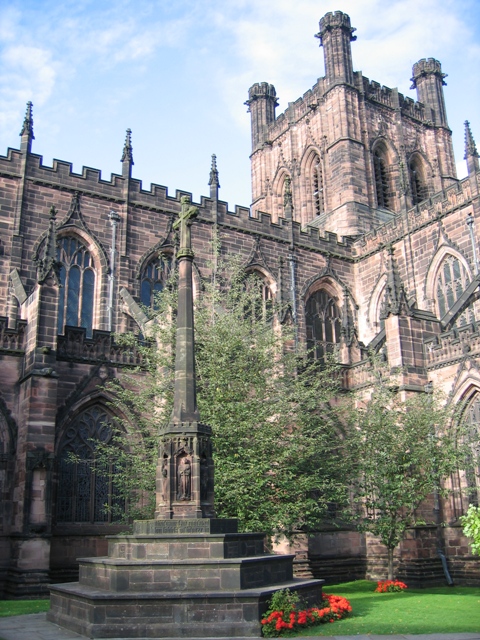
The war memorial at Chester Cathedral
When the war memorial was unveiled at Chester Cathedral on 24 May 1922, two mothers played a central role in the ceremony—Mrs Lydia Sheriff Roberts who had lost three sons in the war and Mrs Mary Beatty who had lost four.[1]
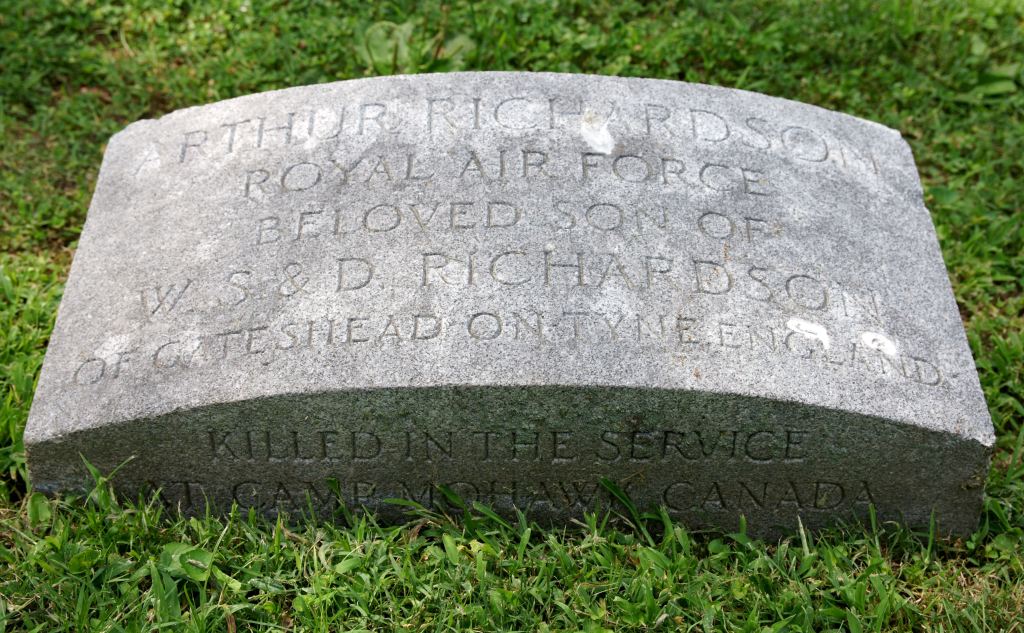
Cadet Arthur Richardson was an English-born accountant working in St Louis, Missouri when he enlisted into the newly formed Royal Air Force in Winnipeg, Manitoba on 11 April 1918.[1]
This is part of a series of essays about the First World War casualties commemorated by the Commonwealth War Graves Commission in Ohio.
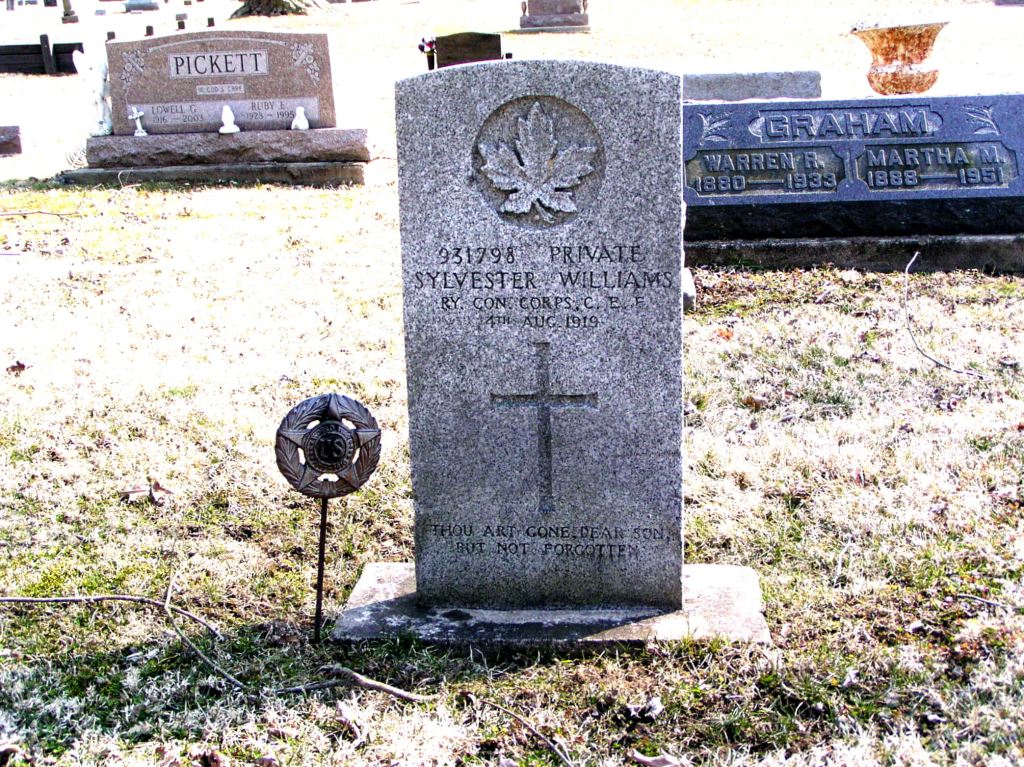
The grave of Private Sylvester Williams
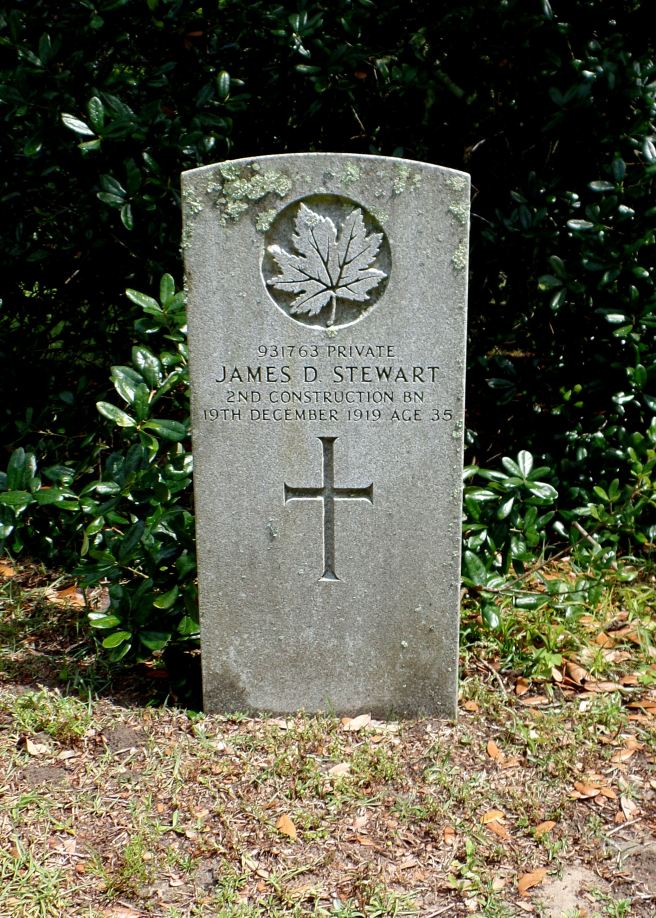
Private Sylvester Williams was one of about 165 African-Americans—one of seven from Ohio—who served with No.2 Construction Company (Coloured) in the Canadian Expeditionary Force.[1] More information about this unit may be found in the story of Private James Doval Stewart.
Sylvester Williams was born on 19 April 1873, at Waynesville, Warren County, Ohio, to Augustus and Mary Jane Williams. His father, a farmer, was born in South Carolina and his mother was from Kentucky. Their children were all born in Ohio and only seven of their twelve offspring survived beyond childhood.[2]
At the time of his enlistment, he was working in Detroit as a brick paver, his occupation for the previous 18 years.[3] Being over-age when he enlisted at Windsor, Ontario on 8 February 1917 he falsified his age and gave his year of birth as 1881. He enlisted to join No.2 Construction Battalion—it raised a company in Windsor largely made up of African-Americans—and was allocated the regimental number 931798.
Private Sylvester Williams sailed with men of No.2 Construction Battalion from Halifax on 28 March on HMT Southland arriving at Liverpool on 7 April. Re-designated as No.2 Construction Company (Coloured), the unit arrived in Boulogne on 17 May. The majority of the unit served in the Jura region, in south-east France, in No.5 District, Canadian Forestry Corps. Their tasks involved the full range of forestry work undertaken by the Canadian Forestry Corps and other labouring tasks in support of that work.
Throughout his life and his military service in France, which was spent entirely in the Jura region, Williams had been a fit and active man but in early-December 1918 he developed a bad cold and a low fever. He felt ‘all in’ during a 2½ mile march and reported sick. After two weeks of treatment locally, he was admitted to No.7 Canadian General Hospital at Etaples where he was diagnosed as suffering from tuberculosis. On 2 January 1919 he was evacuated from France to Reading War Hospital in Berkshire before being transferred to the Canadian Special War Hospital at Lenham in Kent, which specialized in tubercular cases. There it was recommended that he be transferred to hospital in Canada. He sailed for Canada on 11 March on the hospital ship SS Araguaya and was admitted to Ste. Anne de Bellevue Military Hospital, Quebec on 23 March 1919. A medical board recommended his discharge from the CEF and he was formally demobilised on 7 May 1919. He then fell under the control of the Invalided Soldiers Commission.[4]
Although Sylvester Williams’ home address after demobilisation was given as Michigan Avenue, Columbus, Ohio, there is no indication that he ever returned to the United States. After his discharge he was admitted to Lake Edward Sanatorium, Quebec, which specialised in the treatment of tuberculosis. His tuberculosis proved incurable and he died there on 4 August 1919, aged 46. His remains were returned to Ohio where he was buried in Miami Cemetery, Corwin on 8 August 1919.
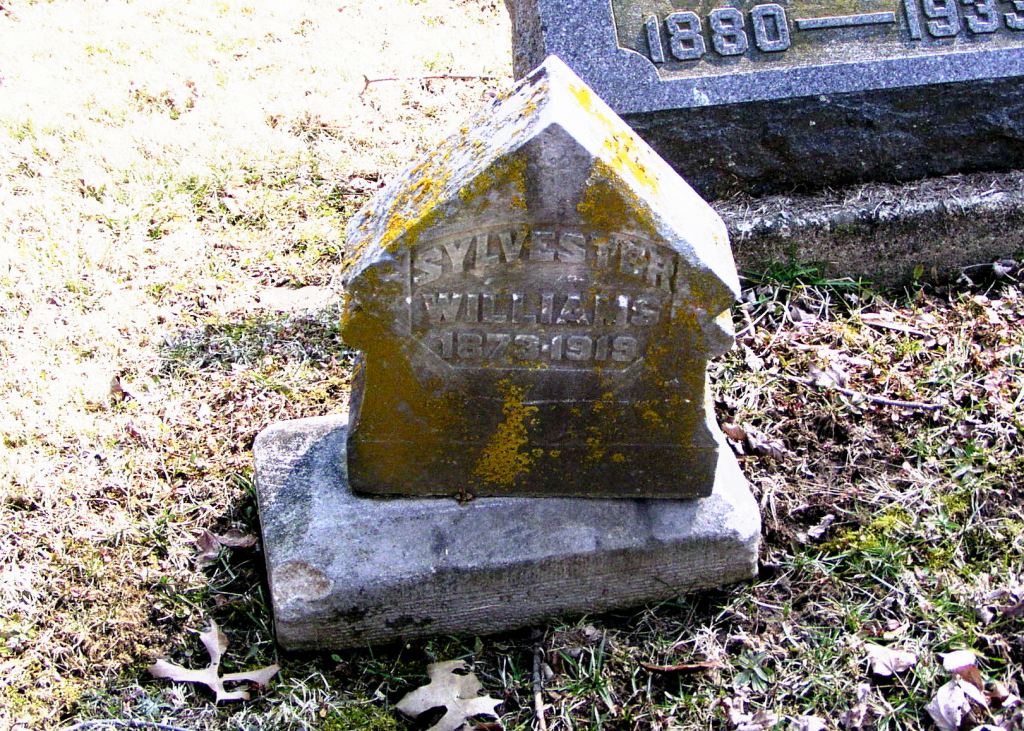
His CWGC headstone records that he served with the Canadian Overseas Railway Construction Corps. This is an error, which is consistent across many of the casualties of No. 2 Construction Battalion.[5] His family paid for the epitaph on his CWGC headstone: ‘Thou art gone dear son but not forgotten.’ The grave is also marked with a smaller, family stone.
The family marker on the grave of Private Sylvester Williams
Private Sylvester Williams is commemorated on Page 545 of the of the Canadian First World War Book of Remembrance; that page is displayed on 18 November.
The Canadian Book of Remembrance showing the entry for Private Sylvester Williams
His medals group comprises the British War Medal 1914-20, and the Victory Medal, which were dispatched to his mother, who also was also sent the Memorial Cross, the Memorial Scroll, and Memorial Plaque.
The grave of Private Sylvester WilliamsThe family marker on the grave of Private Sylvester WilliamsThe Canadian Book of Remembrance showing the entry for Private Sylvester Williams
Acknowledgements: Arne Trelvik and the Warren County Genealogical Society for the information about Sylvester William’s family and for the photographs of his grave.
Sources: Department of Soldiers’ Civil Re-Establishment. (May 1918). Report of the Work of the Invalided Soldiers’ Commission. Ottawa: J De L Taché. Ruck, C W. (1986). Canada’s Black Battalion: No.2 Construction, 1916-1920. Halifax: Society for the Protection and Preservation of Black Culture in Nova Scotia.
1. (Back) The tribute to the unit written by Calvin Ruck records 163 African-Americans, which is a slight understatement. Sylvester Williams is not recorded on the roll compiled by Ruck. Private Samuel Austin Williams is recorded as being from Harveysburg, Ohio, the address given by Sylvester Williams for his mother. In fact, Private Samuel Williams was from Port La Tour, Nova Scotia. It appears that Ruck has combined two soldiers in the roll. At least six other soldiers from Ohio are on that roll, most of whom were working in Detroit and enlisted in Windsor, Ontario:
931825 Private Thomas Cobby, Cincinatti 931404 Sergeant Edward White Hall, Cleveland 931762 Private Fred Davis, Columbus 931630 Private Fred Alvin Davis, Columbus 931577 Private Narvaez Smith, Columbus 931628 Private Edward Madison, Delaware
2. (Back) Augustus Williams (March 1833-24 July 1914) married Mary Jane (née Wornall) (March 1844-28 July 1924) on 5 September 1861. In addition to Sylvester and the children listed here, four children had been born and died by 1880. Harry (21 July 1871- 30 May 1931); Rosa V. (7 May 1875- 22 Jun 1928); Charles A. (8 June 1876-15 April 1919); Sarah Ann (4 December 1877-NK); Mary Elizabeth (later Simpson) (23 July 1879-15 May 1958); John H. (12 July 1883-15 December 1939); and Samuel (18 May 1885-21 January 1953). 3. (Back) Local records indicate that he served in the United States Army during the Spanish American War but this has not been verified. 4. (Back) Upon discharge all officers and soldiers passed to the control of the Commission if they required ‘medical treatment on account of their suffering from tuberculosis, epilepsy, paralysis or other diseases likely to be of long duration or incurable, or on account of their being mentally deficient or insane’. Department of Soldiers’ Civil Re-Establishment. (May 1918). Report of the Work of the Invalided Soldiers’ Commission. p 7. Ottawa: J De L Taché. 5. (Back) This will be the subject of a separate essay.
This essay is about the single First World War casualty commemorated by the Commonwealth War Graves Commission in Georgia.
“This is not for you fellows, this is a white man’s war.” [1]
The grave of Private James Doval Stewart
The recruitment of Black Canadians for service with the Canadian Expeditionary Force caused much debate in Canada. Many Black Canadians, swept along by patriotic fervour at the beginning of the war wanted to volunteer but prejudice prevented widespread recruitment. By November 1915 orders had been issued to allow recruitment of Black soldiers; it was largely ignored. Although small numbers of Black Canadians had managed to enlist from early in the war, it was not until after the introduction of conscription that Black soldiers served in any numbers; even then few made it to front-line battalions. The largest group of Black Canadians to serve with the Canadian Expeditionary Force did so in No.2 Construction Battalion.[2]
This is part of a series of essays about the First World War casualties commemorated by the Commonwealth War Graves Commission in Maryland.
Camp Taliaferro, the Royal Flying Corps training centre near Fort Worth, Texas, will feature in the stories of 22 men who died in the United States while undergoing flying training, three others who died of disease, and one who died while en route by train from Canada.[1]
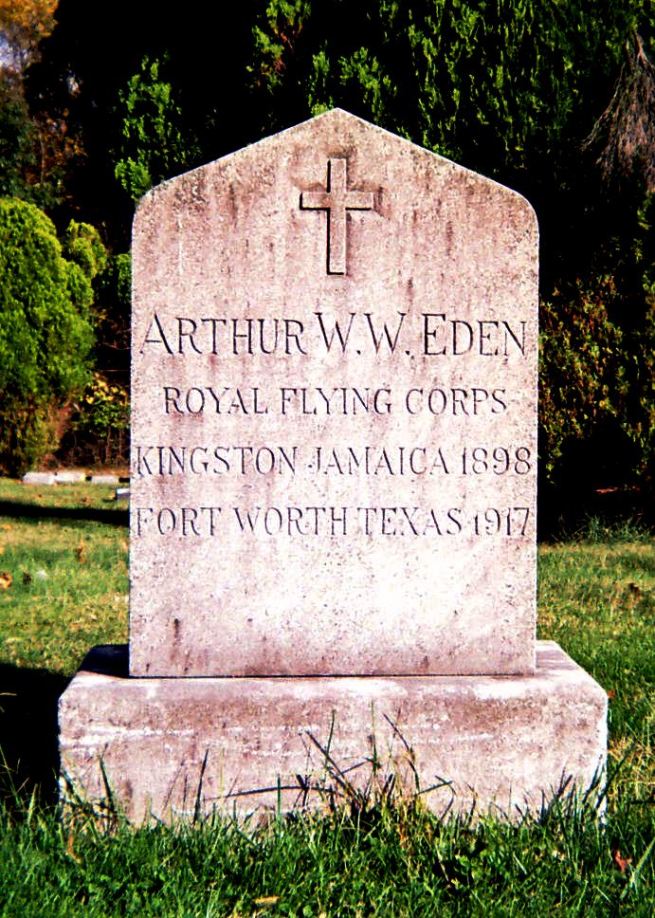
The grave of Cadet Arthur William Webster Eden
Cadet Arthur Eden was killed in a mid-air collision on 21 December 1917; two pilots in another aircraft were killed also.
Arthur William Webster Eden was born on 16 August 1898 in Kingston, Jamaica. His father, William Thomas Eden, a merchant, and his mother Lillian Isabel (née Auld) were Jamaican-born, British citizens of the British West Indies. As far as can be determined, there were six children, although only three survived childhood.[2] Soon after Arthur was born his father set off for England and when Arthur was 10 months old he sailed for England with his mother and siblings. The family lived in London, where his brother Oswald was born and his eldest sister, Helen Isobel, died. Arthur’s father died in late-1908/early-1909 and the family returned to Jamaica. Arthur attended Wolmer’s High School in Kingston from 1909-1913, and his brother attended from 1912.
On 4 April 1913, Arthur, his mother, sister May, and brother Oswald emigrated to the United States, and settled in Baltimore. When he left school Arthur Eden became an electrician and went to work for the Consolidated Gas, Electric Light and Power Co. in Baltimore.
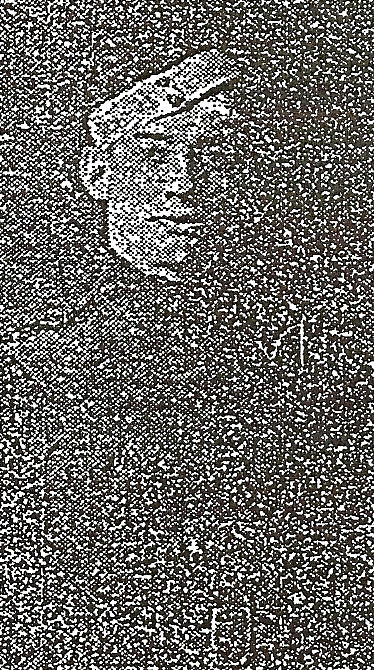
Cadet Arthur William Webster Eden
In the summer of 1917 he journeyed to Toronto and, on 7 September, enlisted into the Royal Flying Corps. He was allocated the number 74788. After a period of ground training, in October he travelled to Camp Taliaferro in Texas, where he joined one of the Canadian Training Squadrons (probably No. 86 Squadron) in No. 43 Wing.
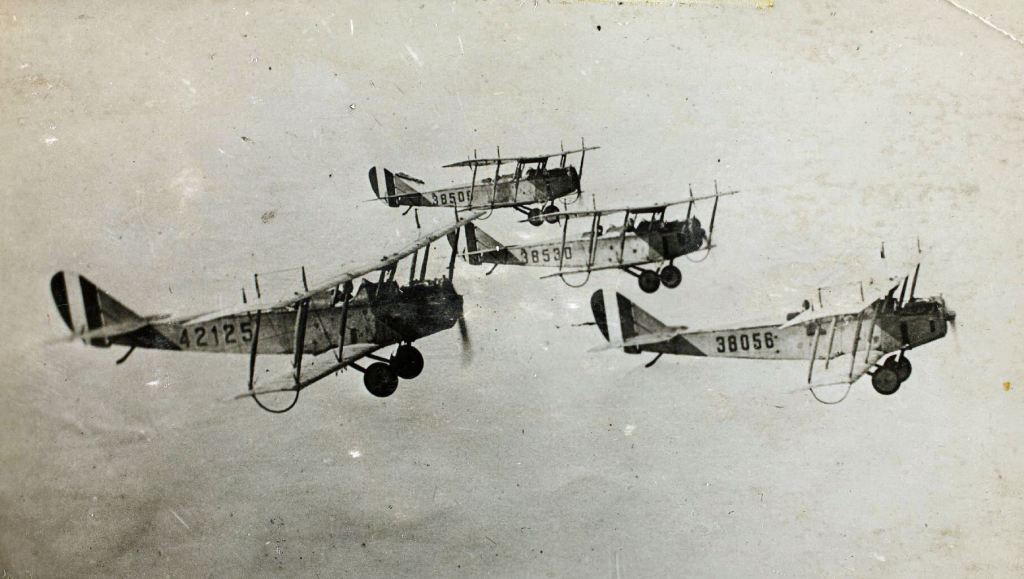
Curtiss JN-4 Training Flight
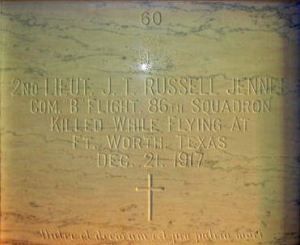
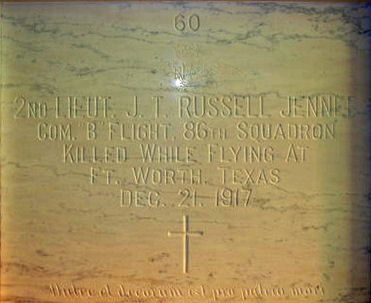
On 21 December 1917, while flying in a Curtiss JN-4 as part of a larger formation near Taliaferro Field No. 2, his aircraft, in which he was flying alone, was involved in a collision in cloud at about 500 feet with a second aircraft flown by Second Lieutenant J. T. R. Jenner and Cadet C. A. Baker. The two aircraft fell joined together, burying all three men underneath—Arthur Eden died from a fracture to the base of his skull.
The panel on the burial chamber of Second Lieutenant J T R Jenner
Following a funeral service at Camp Taliaferro, Cadet Eden’s body was transported by rail back to Baltimore, accompanied by his cousin Cadet J E L Webster, who was also training at Camp Taliaferro.[3] His funeral service was held on 24 December 1917 in the Central Presbyterian Church in Baltimore, officiated by Reverend De Witt M. Benham, before his body was interred at Woodlawn Cemetery.[4] His grave is located in the eastern part of the cemetery in South Wesley East, Single ‘A’, Section 62, Range 3. Cadet Baker, a Canadian, is one of 11 men of the Royal Flying Corps buried at Greenwood Memorial Park, near Fort Worth. The body of Second Lieutenant Jenner, also a Canadian, was returned home; he is buried at Maple Leaf Cemetery in Chatham, Ontario.[5]
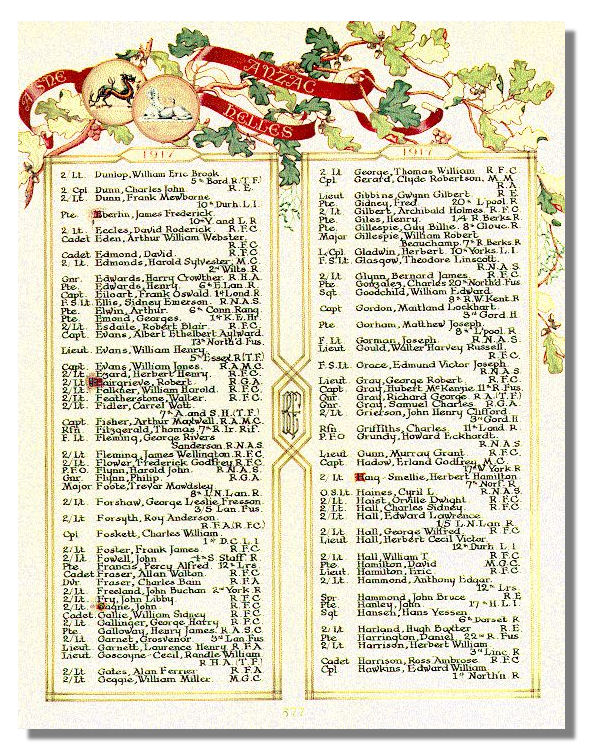
The Canadian Book of Remembrance showing the entry for Cadet Arthur Eden
Cadet Arthur William Webster Eden is commemorated on Page 577 of the Canadian First World War Book of Remembrance; that page is displayed on 14 December.
Cadet Arthur William Webster EdenCurtiss JN-4 Training FlightThe grave of Cadet Arthur William Webster EdenThe Canadian Book of Remembrance showing the entry for Cadet Arthur EdenThe panel on the burial chamber of Second Lieutenant J. T. R. JennerOswald Eden
1. (Back) Thirty-five men of the Royal Flying Corps and Royal Air Force died in aeroplane accidents while stationed at Camp Taliaferro—22 are buried in the United States and 13 are buried in Canada. In addition four men died from disease—three are buried in the United Sates and one in Canada. 2. (Back) William Thomas Eden (1861-before 1909) married Lillian Isabel (née Auld) (2 January 1867-19 Dec 1944) on 25 August 1886 in Kingston, Jamaica; Helen Isobel (8 January 1888-1903); Elizabeth Doris (1891-30 Jan 1892); Arthur Henry Webster Eden (28 December 1895-17 August 1896); May Lilian (21 July 1897-November 1971); and Oswald Archibald Kerrigan (24 January 1902-5 September 1983). 3. (Back) Cadet James Ernest Lelond ‘Erni’ Webster was born on 30 March 1897 at George Town in the Cayman Islands. He became a draughtsman in Baltimore before he enlisted into the Royal Flying Corps in September 1917 and joined No. 82 Canadian Training Squadron in No. 42 Wing at Camp Taliaferro. After the war he returned to work in Baltimore before moving to Jamaica. He died on 11 September 1975. 4. (Back) ‘Young Baltimore Flyer Who Was Buried Yesterday’. (3 January 1918). Baltimore Sun. p 4. 5. (Back) See: Cadet Cyril Albert Baker (biography not yet complete). Second Lieutenant John Thomas Russell Jenner (known as Russell) was born at Kingsville, Ontario on 13 January 1898, the youngest child and only son of John Earl Jenner MD, and Ella Eugenia (née Taylor). He enlisted into the Royal Flying Corps at Toronto on 29 May 1917 and was commissioned into the Royal Flying Corps on 1 September 1917. He was serving with ‘B’ Flight, No. 86 Canadian Training Squadron in No. 43 Wing when he was killed.
This is part of a series of essays about the First World War casualties commemorated by the Commonwealth War Graves Commission in Maryland.
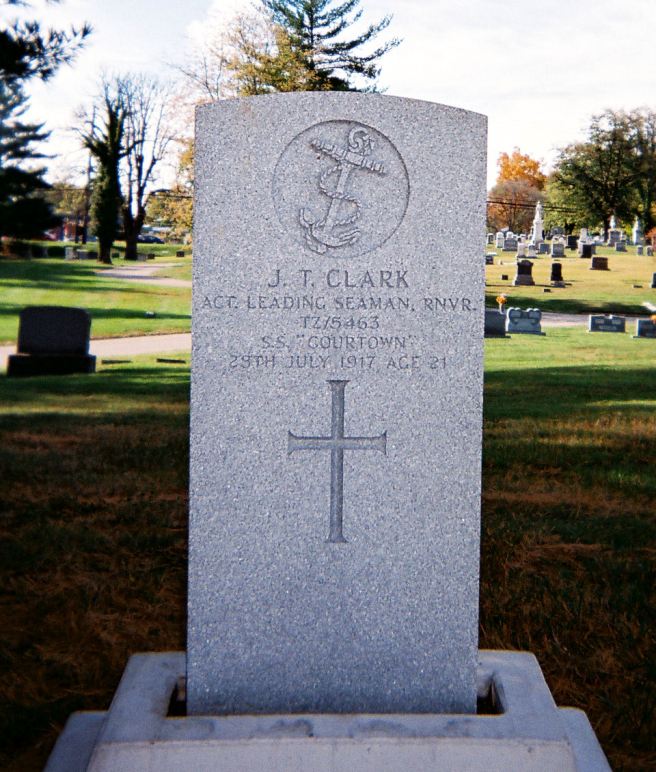
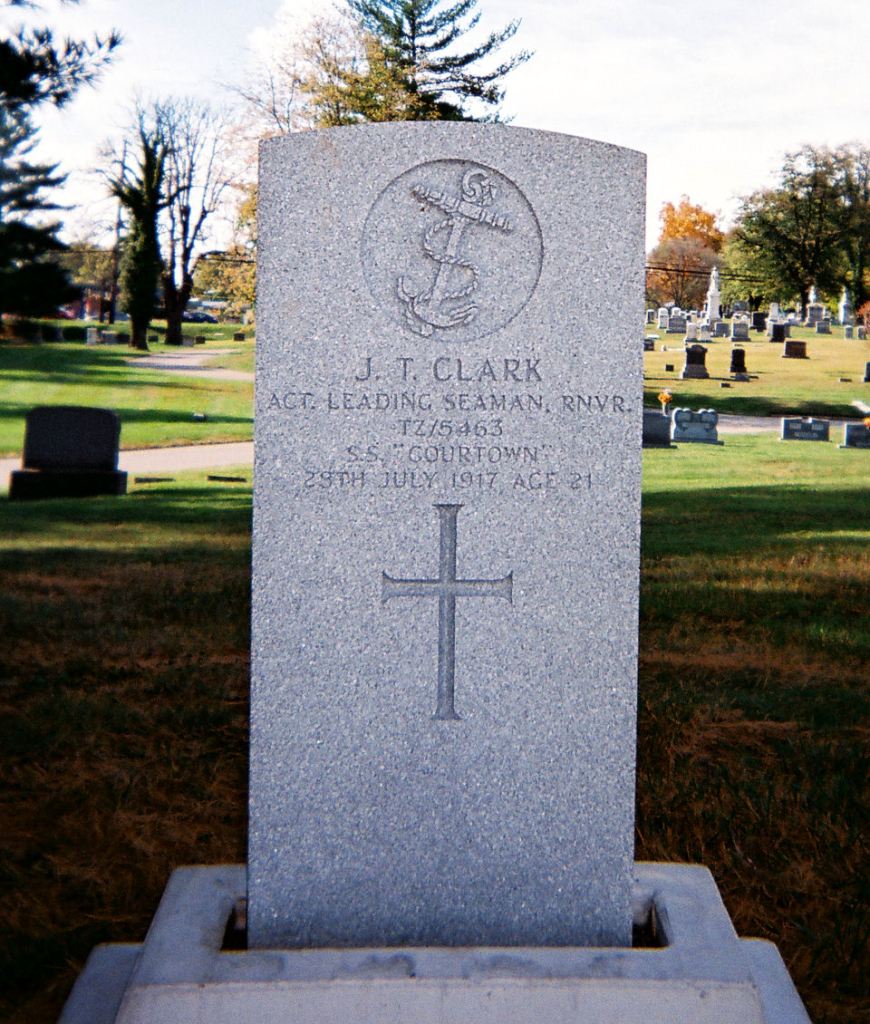
The grave of Leading Seaman Joseph Thompson Clark
Joseph Thompson Clark was nearby when HMS Natal blew up in Cromarty Firth in 1915, was present at the Battle of Jutland, and survived being torpedoed in the Mediterranean only to drown in a swimming accident in Baltimore harbour in 1917.
He was born on 26 August 1896 at Cowpen, near Blyth, an industrial town in Northumberland, one of the three children of Fergus and Mary Ann Clark.[1] His father had worked variously as a miner, a boiler fireman and as a crane driver. Joseph, like his older brother, worked in a sawmill.
Just after the outbreak of war, Clark enlisted on 21 August 1914 into the British Army at Newcastle-upon-Tyne (4903, Private) and joined the newly raised 8th (Service) Battalion, The Northumberland Fusiliers, the first of the New Army battalions raised for the Regiment. He falsely gave his age as 19. His early service was somewhat ill-disciplined and he was discharged on 30 October as ‘not being likely to become an efficient soldier’.[2]
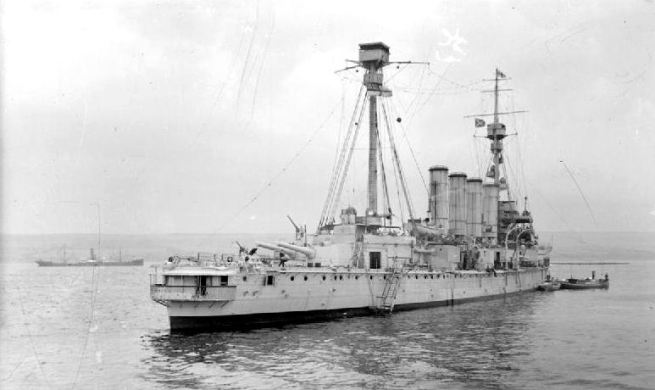
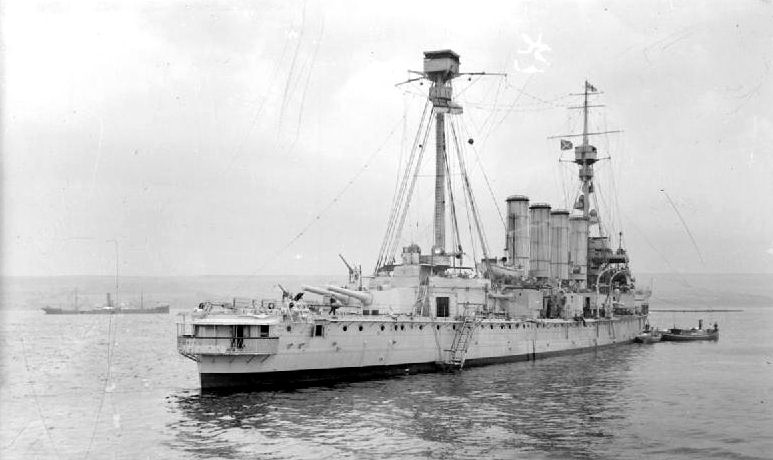
Clark then enlisted into the Royal Naval Volunteer Reserve on 23 June 1915, just before his 18th birthday—he again falsely stated his age, giving his birthday as 26 August 1895. He was allocated the number TZ/5463 and joined the training depot at Crystal Palace. After a period of training he joined HMS Shannon, a Minotaur-class armoured cruiser, on 30 September 1915. He was aboard her on 30 December 1915 when the armoured cruiser HMS Natal exploded nearby in Cromarty Firth with the loss of over 400 crew and civilian visitors—Shannon assisted in the rescue of the survivors.[3] Clark was also in HMS Shannon during the Battle of Jutland, although the ship did not see action that day.
HMS Shannon at Cromarty Firth, 1915
On 31 August 1916, Able Seaman Clerk reported for duty ashore for training as a gunner on defensively armed merchant ships; he completed this training on 9 November and, having found his niche, was appointed Acting Leading Seaman. When the story of Clark’s death appeared in the Baltimore Sun, it was reported that he had served on the SS Bretwalda, and had survived her sinking on 13 December 1916, when she was attacked by UB-43, 220 miles east of Malta on passage from Calcutta to Boulogne with a cargo of jute. It was reported that he spent several days adrift in a lifeboat before being picked up and taken to port in Italy. Soon after he joined the SS Courtown, a general cargo ship built in 1909.[4]
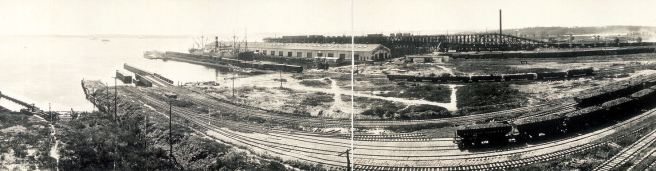
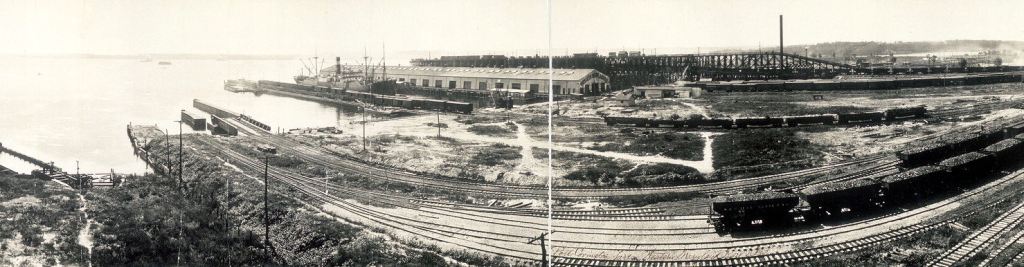
Acting Leading Seaman Clark arrived in the United States in July 1917 as the chief gunner on the Courtown, which berthed at the Western Maryland Railroad pier at Port Covington, Baltimore. On 28 July, after lunch he and his friends decided to go for a swim near the grain sheds. Clark could not swim and he wore a life-belt. He was accompanied by another gunner, Able Seaman Herbert Crawshaw,[5] and Radio Operator Cyril Matthews. Crawshaw had survived the explosion on HMS Natal—he was on the upper deck when the explosion occurred—and had trained as a gunner with Clark, completing his training on the same day; he too had served in SS Bretwalda before joining the Courtown.
Port Covington, Western Maryland Railroad Yards, 1913
Clark decided that he had had enough practice with the life-belt and took it off to try and swim without it. Crawshaw swam to him to give assistance if needed but, before he could reach his friend, Clark disappeared under the water. Crawshaw tried to grab him and felt him tug at his body but he did not return to the surface. The other men dived to try and find Clark but they were unsuccessful. Having told the ship’s Master about the accident, the police were informed and the police boat Lannan was dispatched to drag for the body; it was found a few hours later. The coroner, Otto M. Bernhard, recorded a finding of accidental drowning.[6]
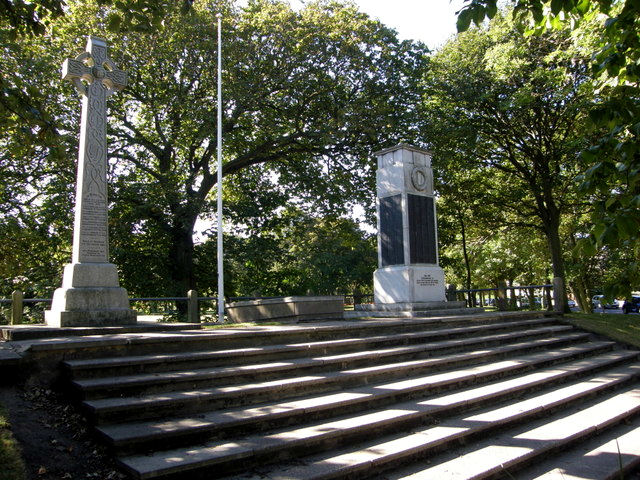
Acting Leading Seaman Joseph Thompson Clark was buried in Cedar Hill Cemetery, Baltimore, on 30 July 1917.[7] He is commemorated there by a Commonwealth War Graves Commission headstone. He is also commemorated on the Blyth war memorial.
Blyth War Memorial – the First World War memorial is on the right, the Boer War memorial is on the left
His medals group comprises: British War Medal 1914-20, and Victory Medal.
The grave of Acting Leading Seaman Joseph Thompson ClarkHMS Shannon at Cromarty Firth, 1915Port Covington, Western Maryland Railroad Yards, 1913Blyth War Memorial – the First World War memorial is on the right, the Boer War memorial is on the left
1. (Back) Fergus Clark (1863-1936) married Mary Ann Shirran (1867-NK) in 1885; James (1886-NK); and Isabella (1894-NK). Another sibling died in childhood. 2. (Back) His offences, mostly relatively minor, included absence overnight, gambling in barracks, smoking in the ranks, making an improper remark to an officer, talking in the ranks, and breaking out of detention while undergoing punishment. At this stage of the war, the Army could be selective with recruiting and Clark was discharged under King’s Regulation 392(iii)c: ‘Recruit within three months of enlistment considered unfit for service’. 3. (Back) A full account of the disaster may be found here: HMS Natal. 4. (Back) ‘Naval Gunner Drowned’. (29 July 1917). Baltimore Sun. p 14. This article contains a number of facts about Clerk’s service but it is evident when comparing it to his service record that they have been mixed up when recounted. 5. (Back) Able Seaman Herbert Wentworth Crawshaw was born on 9 July 1898 at Mirfield, Yorkshire. Prior to the war he worked as a miner. He enlisted on 15 March 1915 (numbered TZ/3981). Like Clark, he was underage and give his birthday as 9 July 1896. His career paralleled Clark’s and after his period on defensively armed merchant ships he served for the last nine months of the war in Gibraltar. He was demobilized on 1 May 1919. He died in Yorkshire in 1959. 6. (Back) Death Certificate. (30 July 1917). Health Department, City of Baltimore. Certificate number D7149. The certificate shows his name as ‘Joseph L. Clark’. 7. (Back) Plot E, Lot 172, Grave 11. The cemetery register incorrectly records his name as ‘James L. Clark’.
This is part of a series of essays about the First World War casualties commemorated by the Commonwealth War Graves Commission in Maryland.
Acting Leading Seaman Eustace Alfred Bromley, Royal Navy (and Cadet Reginald Cyril Johnson, Mercantile Marine) (and Seaman Algot Buske, Mercantile Marine)
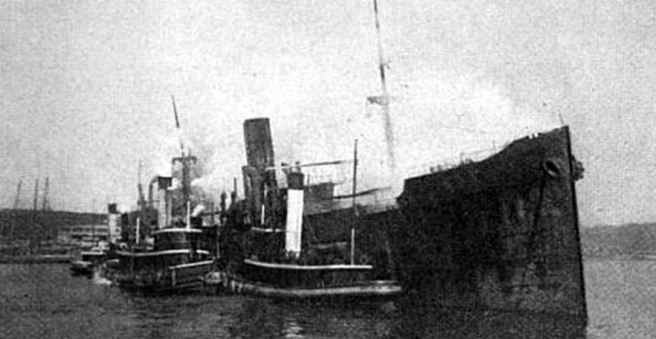
SS Kerry Range scuttled in shallow water in Baltimore harbour
Late on 30 October 1917 a fire broke out on Baltimore & Ohio Railroad Pier 9 at Locust Point in Baltimore, Maryland. The fire destroyed the pier, the old immigration building on it, and set fire to the SS Kerry Range, a British, armed, merchant ship that was moored alongside. Four men died and the damage caused was considerable—freight worth over $5,000,000 was destroyed and the Kerry Range was wrecked. The fire occurred at the height of anti-German hysteria and speculation about incendiaries placed by German agents led to the arrest of a number of ‘alien enemies’. An investigation concluded, however, that the blaze was caused by an electrical fire in one of the buildings on Pier 9 that ignited piles of oakum.[1]





 Sacrifice