This is part of a series of essays about the First World War casualties commemorated by the Commonwealth War Graves Commission in New York.
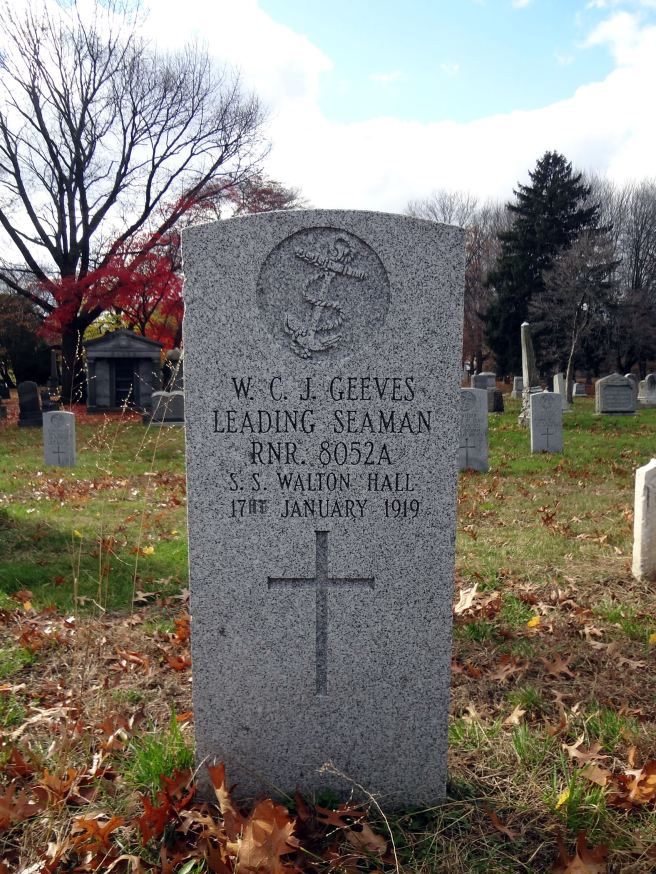
The grave of Leading Seaman William Charles John Geeves
Leading Seaman Geeves survived 3½ years as a gunner on defensively armed merchant ships, including the sinking of the cargo streamer SS Betty by U-61, only to succumb to influenza in New York.
William Charles John Geeves was born in London on 3 December 1889 the second son and second of the seven children of Charles and Eliza Geeves.[1] The family lived at New Beckton, Woolwich, where his father, who was born in Kingstown (now Dún Laoghaire) in Ireland, worked as a dock labourer. William Geeves became a merchant seaman.
On 15 April 1915, William Geeves enrolled in the Royal Naval Reserve and was allocated the number 8052A. After a period of training at HMS Pembroke in Chatham he joined SS Tuskar, a small, defensively armed cargo ship, on 19 May.
This is part of a series of essays about the First World War casualties commemorated by the Commonwealth War Graves Commission in New York.
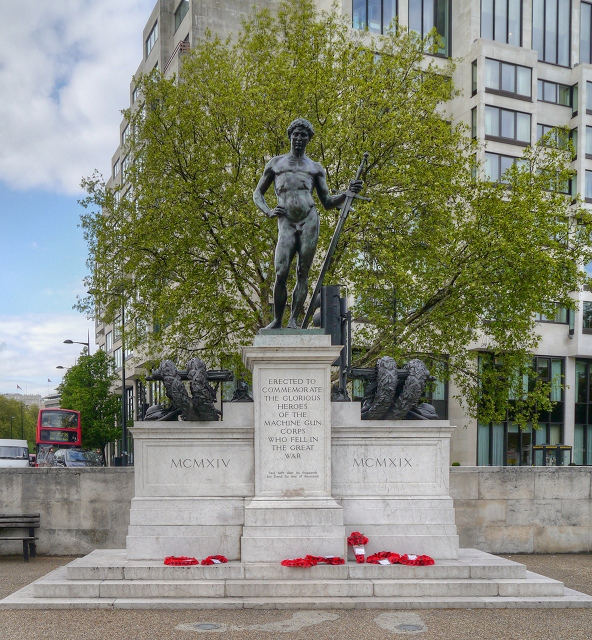
The Machine Gun Corps Memorial
George Birkenhead and his brother, John, served together in The Cheshire Regiment and in the Machine Gun Corps. John was killed in action in 1918 and George died in the United States in 1921.
This is part of a series of essays about the First World War casualties commemorated by the Commonwealth War Graves Commission in New York.
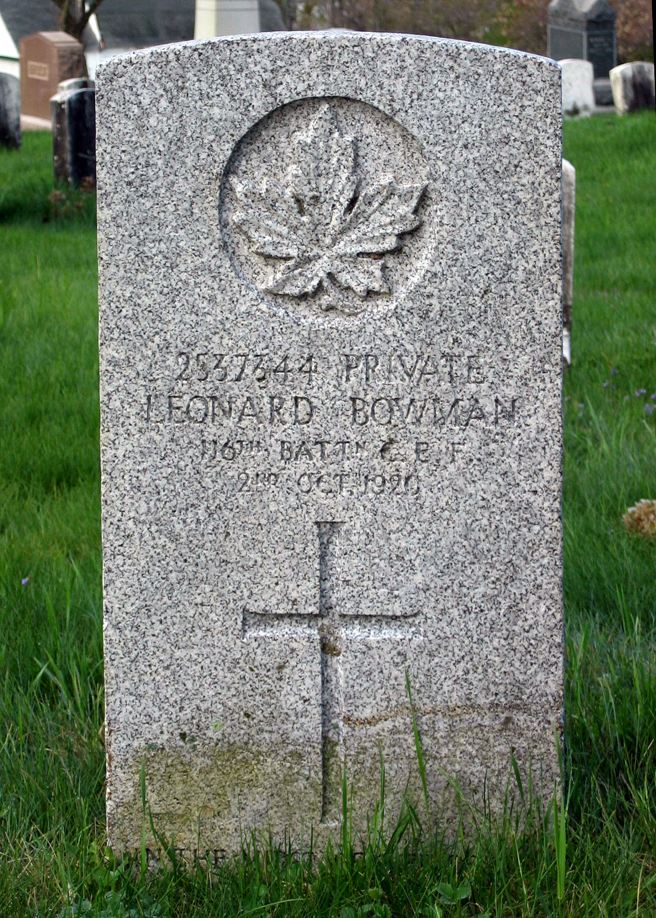
The grave of Private Leonard Bowman
In the village of Liberty in Sullivan County, New York, just prior to Remembrance Day 1921, a ‘Soldiers’ Circle’ was proposed by Liberty Cemetery Association. It was proposed particularly for ‘those veteran dead who have no families or friends to give them a fitting burial place ’.[1] One of the first soldiers to be buried there was Private Leonard Bowman, an Englishman, who had been wounded serving in France with 116th Battalion in 3rd Canadian Division.
His family name was, in fact, Bouman—his father, Bernard, was Dutch and worked as a ladies’ tailor in London. Leonard was born in West Hampstead on 4 September 1887, the fifth of the seven surviving children of Bernard and his wife Sarah.[2]
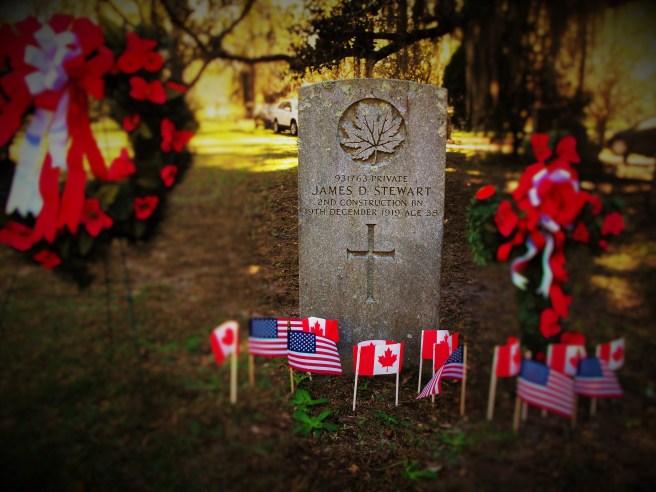
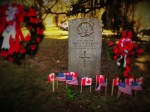
The grave of Private James Stewart, 11 November 2015
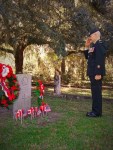
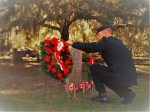
On Remembrance Day 2015, the Canadian Armed Forces contingent stationed in the United States at Fort Gordon, Georgia, held an act of remembrance at the grave of Private James Stewart.
Private Stewart was an African-American from Savannah, Georgia, who enlisted for service with the Canadian Expeditionary Force and served with No.2 Construction Company attached to the Canadian Forestry Corps in the Jura region in south-east France, and at Alençon in northern France. He died in Canada on 19 December 1919 and was buried in Laurel Grove South Cemetery, Savannah four days later.
The event was organised by Corporal Allan Gudlaugson and the photographs were taken by Marie-Carole Gallien.
The grave of Private James Stewart, 11 November 2015
The Act of Remembrance, 11 November 2015
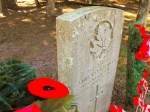
The grave of Private James Stewart, 11 November 2015
Warrant Officer Tom Weale, 11 November 2015
Corporal Allan Gudlaugson, 11 November 2015
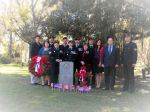
The Canadian contingent at Laurel Grove South Cemetery 11 November 2015
This is part of a series of essays about the First World War casualties commemorated by the Commonwealth War Graves Commission in New York.
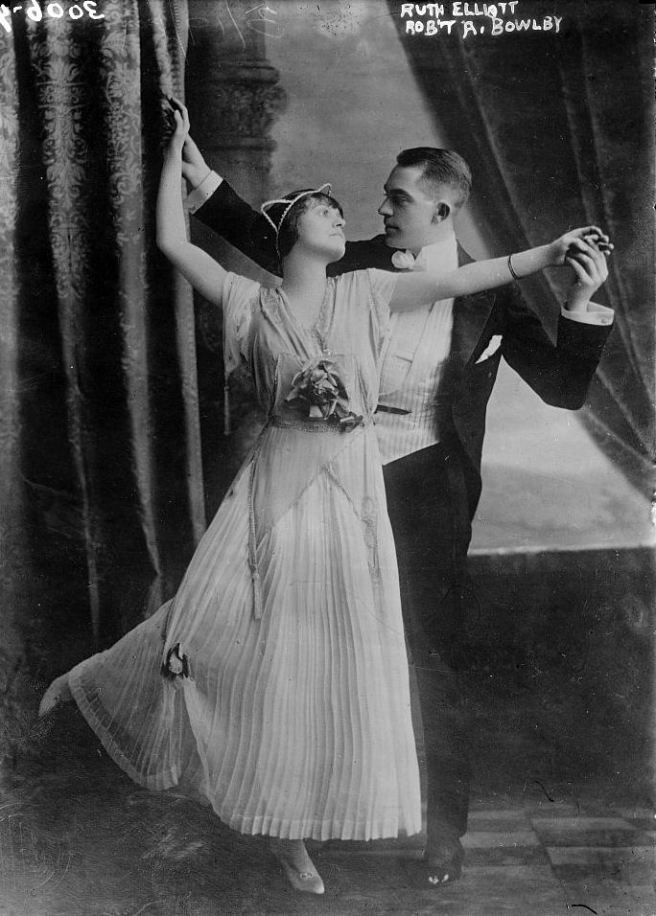
Miss Ruth Elliott and Robert Archer Bowlby
Robert Archer Bowlby is one of two American dancers to feature in this project—the other, much more famous, is Vernon Castle, who is buried in the same cemetery in New York. There are numerous newspaper reports, and records of talks given by Lieutenant Bowlby, that testify to his war service in France, his shell shock and subsequent role in support of the War Bond drives in the United States. His service was more prosaic, however—he made it to England before falling sick and being diagnosed with a heart condition, which resulted in his return to Canada and discharge.
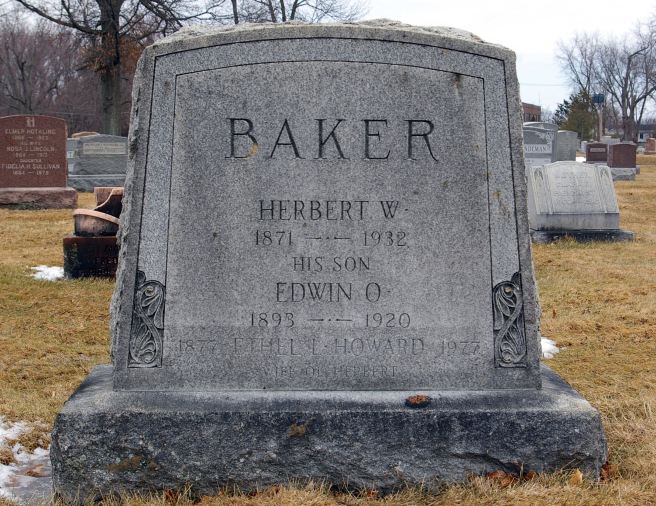
Edwin Otterson Baker was born at Roanoke, Virginia on 12 October 1893,[1] the son of Herbert Baker and his first wife.[2] His mother had died by 1900 and his father subsequently remarried, Ethel Howard, on 24 June 1903. The following year the family emigrated to Canada, settling initially in Portage la Prairie, Manitoba, where his younger half-sister, Barbara, was born in 1907.[3] By 1911 the family were living in Ottawa. Edwin later moved to Montreal, where he worked for a grocer.
He enlisted on 8 April 1916 in Montreal for service with the Canadian Expeditionary Force. For one reason or another he decided to conceal both his real name and his place of birth. He gave his name as Edward Oliver Brownlee and his place of birth as Portage la Prairie. He joined the 148th Battalion and was allocated the regimental number 842021. The Battalion, comprising 32 officers and 951 other ranks, sailed from Halifax on RMS Laconia[4] on 26 September 1916 arriving in England on 6 October and on that day he was promoted to Lance Corporal.
This is part of a series of essays about the First World War casualties commemorated by the Commonwealth War Graves Commission in New York.
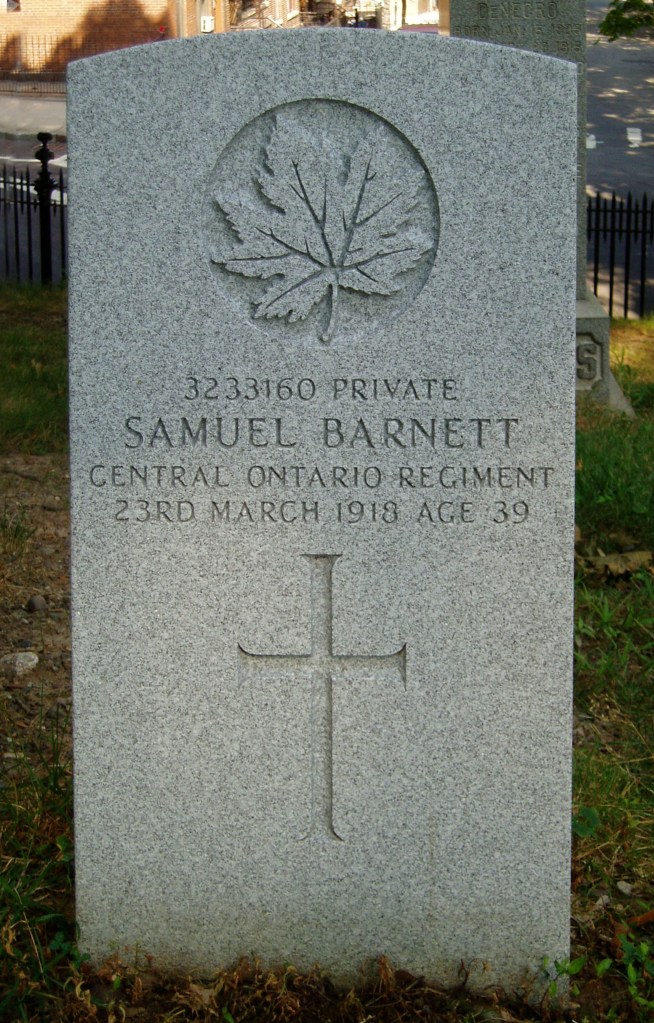
The grave of Private Samuel Barnett
Samuel Barnett was born on 18 February 1879 in Belfast, Ireland, the eldest of the two sons of Matthew and Matilda Barnett.[1] He was a shipping clerk in Belfast before he emigrated to the United States in 1901 with his mother and his younger brother, Matthew. They lived on Fifth Avenue, Brooklyn, a block from the Empire State Building; Samuel worked in New York as an underwriter.
On 11 February 1918 in New York he was examined and found fit for service with the Canadian Expeditionary Force and on 18 March he travelled by train via Niagara Falls to Toronto where he was attested and joined the 2nd Depot Battalion, 1st Central Ontario Regiment at Exhibition Camp; he was allocated the regimental number 3233160.
Although seemingly fit when he underwent his initial medical examination, from the time of his arrival in Toronto he felt under the weather and on 20 March he was sick in the cookhouse. He was taken to the hospital at Exhibition Camp in the early evening. There he was diagnosed as suffering from influenza and he soon developed pneumonia; he died of heart failure at 11.30pm on 23 March 1918. His body was returned home and he was buried in Greenwood Cemetery, Brooklyn, on the northern side of the cemetery near the junction of 7th Avenue and 22nd Street, in Section J, Lot 33488. His mother and his brother are buried with him; their grave is unmarked. He is one of two First World War CWGC burials in that cemetery—the other is Cadet L H Thompson, Royal Air Force, who died on 30 October 1918.
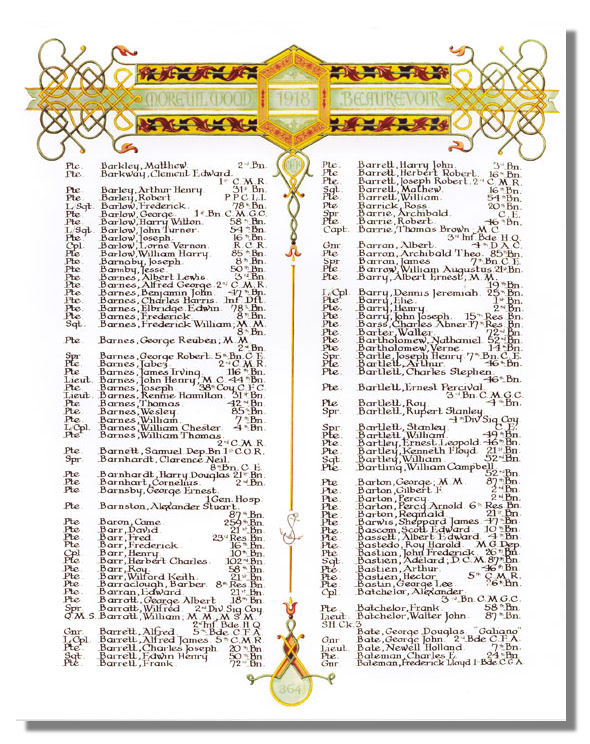
Private Samuel Barnett is commemorated on page 364 of the Canadian First World War Book of Remembrance; that page is displayed on 10 August. His father received his Memorial Plaque and Scroll.
The grave of Private Samuel BarnettThe Canadian Book of Remembrance showing the entry for Private Samuel Barnett
1. (Back) Matthew Barnett (1849-7 November 1927) married Matilda Brown (1848-23 July 1911) at Malone Presbyterian Church in Belfast on 12 April 1871. They had two children who died as infants before Samuel was born in 1879. Matthew Barnett Sr. died in Belfast and is buried in Belfast City Cemetery. Matthew Barnett Jr. (28 January 1887-22 April 1949).
This is part of a series of essays about the First World War casualties commemorated by the Commonwealth War Graves Commission in New York.
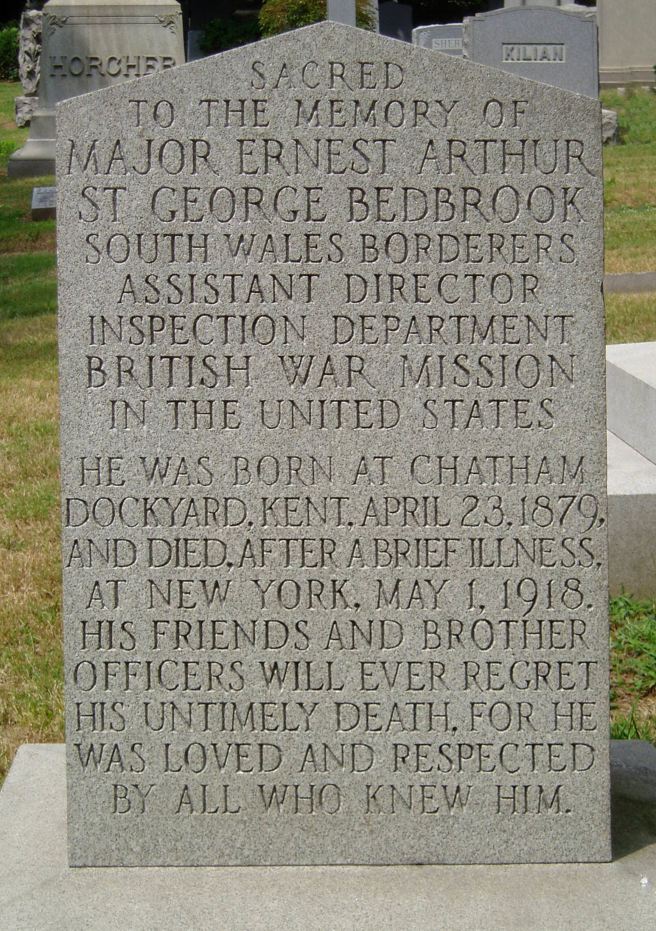
The Grave of Major Ernest Bedbrook
Ernest Arthur St George Bedbrook was born at Chatham Dockyard in Kent on 23 April 1879, the seventh of the 10 children of James and Matilda Bedbrook.[1] His father became ‘Chief Inspector of Machinery in Her Majesty’s Fleet’ in the rank of Engineer Rear Admiral..
Educated at St. George’s College, Wimbledon, he became a civil engineer and joined the Civil Engineering Department of the Admiralty and later London County Council; in the latter appointment he was involved in the design of Greenwich generating station. He then worked for Messrs. Rendel & Robertson, Consulting Engineers for the India Office,[2] and was European representative of the Pennsylvania-based Midvale Steel Co.
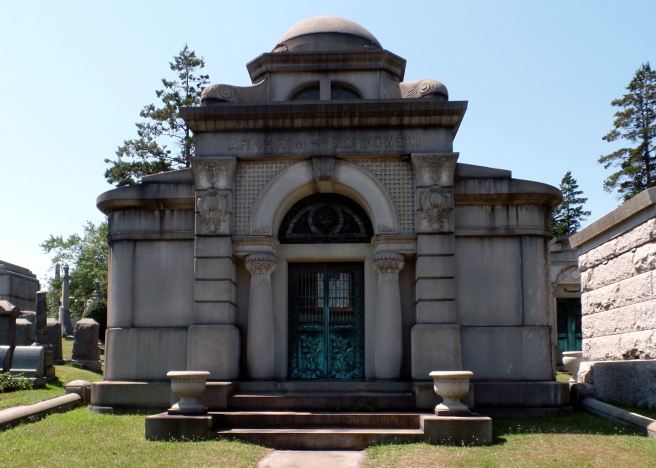
The Arnheim-Zorkowski Mausoleum in Beth Olam Cemetery
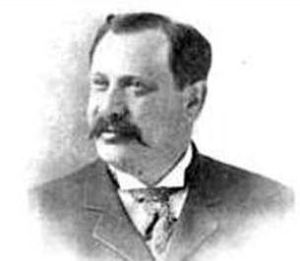
Marks Arnheim
Samuel Walter Arnheim was born in New York on 21 April 1889 into a wealthy Jewish family, the only son and youngest of the three children of Marks and Fannie Arnheim.[3] His father was born in Berlin and had arrived in the United States as a child. He travelled the United States and the West as a young man before returning to New York, where he established a tailoring business in 1877 in ‘Little Germany’ in the Bowery. He became a US citizen in 1881. The business flourished and in 1892 he moved to a large building on the corner of Broadway and Ninth Street; it became one of the most prominent tailors in the city and during the war, in addition to high quality men’s suits, made uniforms for Army and Navy officers. Samuel’s mother, from Connecticut, also had a German father.
This is part of a series of three essays about the First World War casualties commemorated by the Commonwealth War Graves Commission in Tennessee.
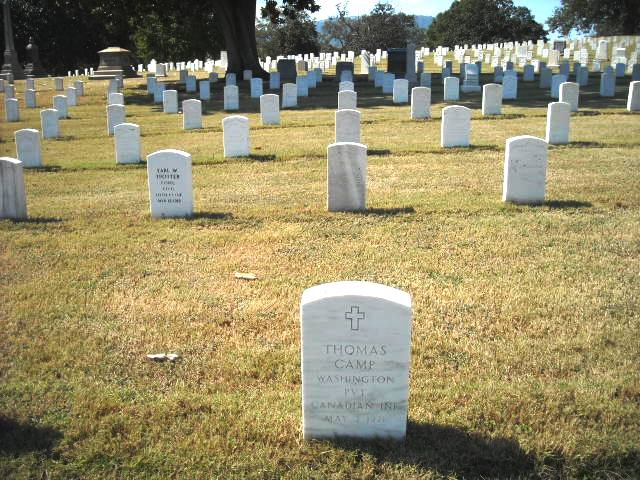
The grave of Private Thomas Camp in Chattanooga National Cemetery
Thomas Camp was an American of British descent born at Madisonville, Tennessee on 24 January 1896, the son of Charlie and Sallie (née Arp) Camp.[1] Little is known of his wider family but he worked as a baker and lived in Shooks Gap, a small settlement south-east of Knoxville.
He enlisted at Montreal on 6 February 1918 for service with the Canadian Expeditionary Force and joined the 1st Depot Battalion, Quebec Regiment, where he was allocated the number 3081869. Camp’s early service was spent in hospital until 15 May, when he was posted to Valcartier, the site of the largest training camp in Canada, to be employed as a baker.

 Sacrifice