This is part of a series of essays about the First World War casualties commemorated by the Commonwealth War Graves Commission in Rhode Island.
Palmer Wilkinson Taylor
Palmer Wilkinson Taylor was born on 10 March 1896 in Providence, Rhode Island, the youngest of the two children and only son of Frank and Harriett Taylor; he was of English stock—both sets of grandparents were born in England.[1] The family lived in Massachusetts before moving, sometime before 1910, to Santa Monica. In February 1913 his mother died and in 1915 Taylor began his studies at Stanford University. He abandoned his studies in order to enlist in the Royal Flying Corps.
This is part of a series of essays about the First World War casualties commemorated by the Commonwealth War Graves Commission in Rhode Island.
Second Lieutenant Evanda Berkeley Garnett
Not all of the casualties buried in the United States were repatriated in the period immediately after the First World War. Second Lieutenant Evanda Berkeley Garnett was killed in an air crash in Lincolnshire on 27 January 1918. Over 40 years later, on 16 September 1959, his sister Caroline called at the United States Embassy in London in order to arrange for the disinterment of his ashes and for their return from Lincolnshire to Rhode Island. She believed, incorrectly, that the remains of the other airman killed in the crash had been repatriated previously and stated that it was the family’s intention to bring Evanda Garnett home too. His ashes were duly exhumed and sent to the United States where they were reinterred in the family plot in Island Cemetery, Newport.[1]
This shorter piece by Dr. Dusch was written for this project. It describes Bennett’s involvement with aviation in the United States, his service with the Royal Flying Corps in France, his untimely death and his mother’s efforts to commemorate her only son. More information about Dr. Dusch may be found at the end of the essay. Footnotes are by the project editor.
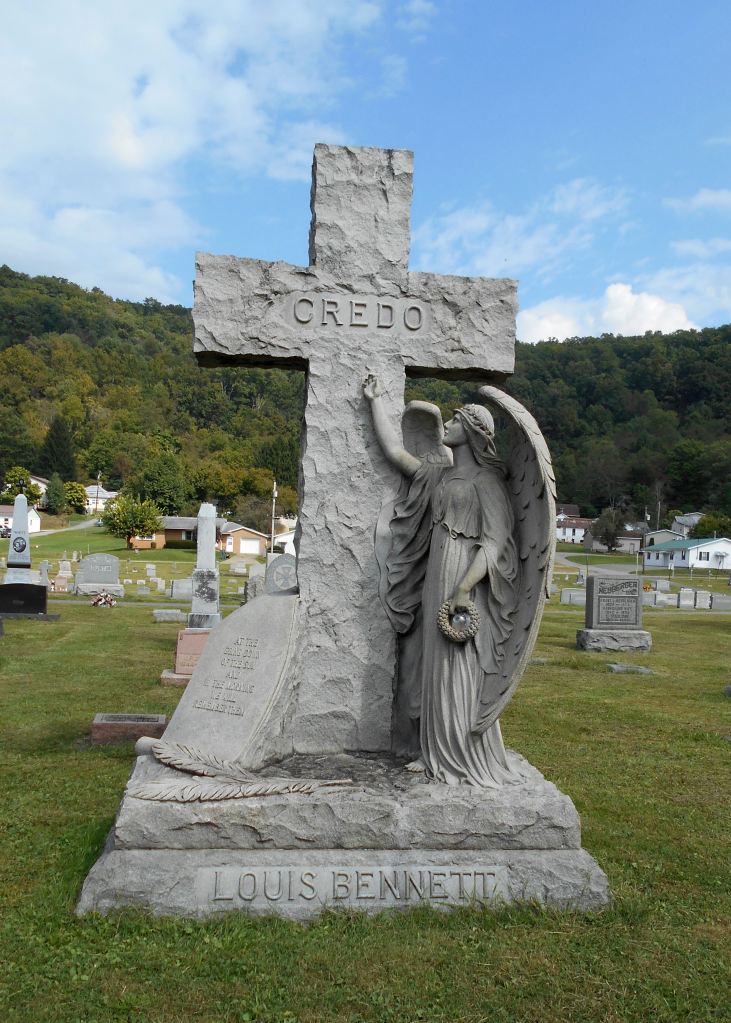
The memorial to Louis Bennett Jr. in Machpelah Cemetery, Weston
West Virginia’s only Great War ace, Louis Bennett, Jr. was born in Weston, West Virginia, on 22 September 1894.[1] Unlike many of his peers who were merely enticed by the thrill of flying and became good pilots in the war, Bennett was much more. He clearly thought about aviation keenly and its impact on the war in larger terms, and he also took action on his ideas to bring them to fruition.
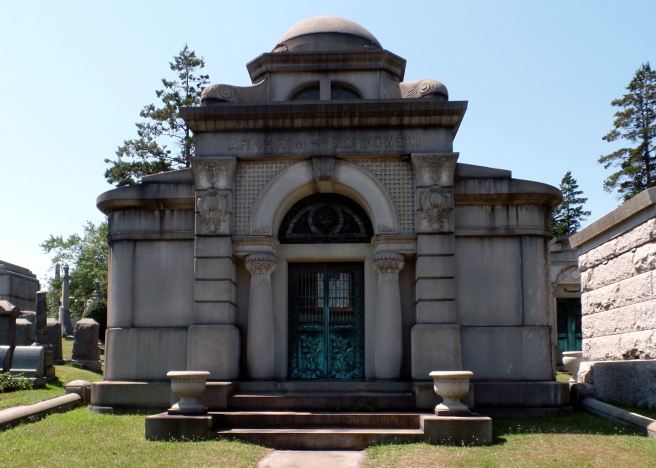
The Arnheim-Zorkowski Mausoleum in Beth Olam Cemetery
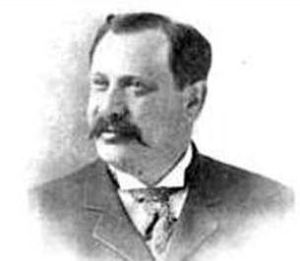
Marks Arnheim
Samuel Walter Arnheim was born in New York on 21 April 1889 into a wealthy Jewish family, the only son and youngest of the three children of Marks and Fannie Arnheim.[3] His father was born in Berlin and had arrived in the United States as a child. He travelled the United States and the West as a young man before returning to New York, where he established a tailoring business in 1877 in ‘Little Germany’ in the Bowery. He became a US citizen in 1881. The business flourished and in 1892 he moved to a large building on the corner of Broadway and Ninth Street; it became one of the most prominent tailors in the city and during the war, in addition to high quality men’s suits, made uniforms for Army and Navy officers. Samuel’s mother, from Connecticut, also had a German father.
This is part of a series of essays about the First World War casualties commemorated by the Commonwealth War Graves Commission in Maryland.
Camp Taliaferro, the Royal Flying Corps training centre near Fort Worth, Texas, will feature in the stories of 22 men who died in the United States while undergoing flying training, three others who died of disease, and one who died while en route by train from Canada.[1]
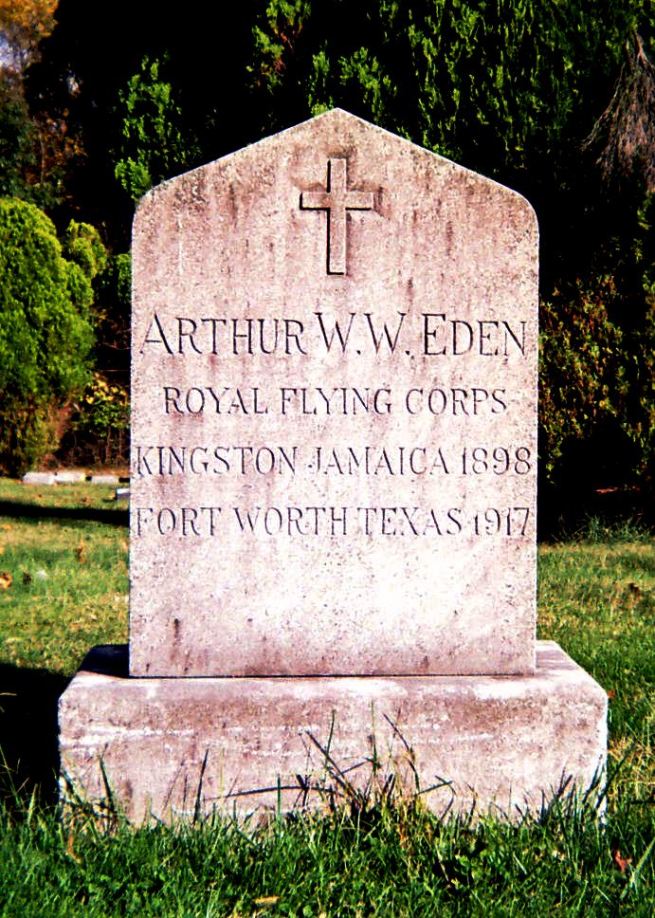
The grave of Cadet Arthur William Webster Eden
Cadet Arthur Eden was killed in a mid-air collision on 21 December 1917; two pilots in another aircraft were killed also.
Arthur William Webster Eden was born on 16 August 1898 in Kingston, Jamaica. His father, William Thomas Eden, a merchant, and his mother Lillian Isabel (née Auld) were Jamaican-born, British citizens of the British West Indies. As far as can be determined, there were six children, although only three survived childhood.[2] Soon after Arthur was born his father set off for England and when Arthur was 10 months old he sailed for England with his mother and siblings. The family lived in London, where his brother Oswald was born and his eldest sister, Helen Isobel, died. Arthur’s father died in late-1908/early-1909 and the family returned to Jamaica. Arthur attended Wolmer’s High School in Kingston from 1909-1913, and his brother attended from 1912.
On 4 April 1913, Arthur, his mother, sister May, and brother Oswald emigrated to the United States, and settled in Baltimore. When he left school Arthur Eden became an electrician and went to work for the Consolidated Gas, Electric Light and Power Co. in Baltimore.
Cadet Arthur William Webster Eden
In the summer of 1917 he journeyed to Toronto and, on 7 September, enlisted into the Royal Flying Corps. He was allocated the number 74788. After a period of ground training, in October he travelled to Camp Taliaferro in Texas, where he joined one of the Canadian Training Squadrons (probably No. 86 Squadron) in No. 43 Wing.
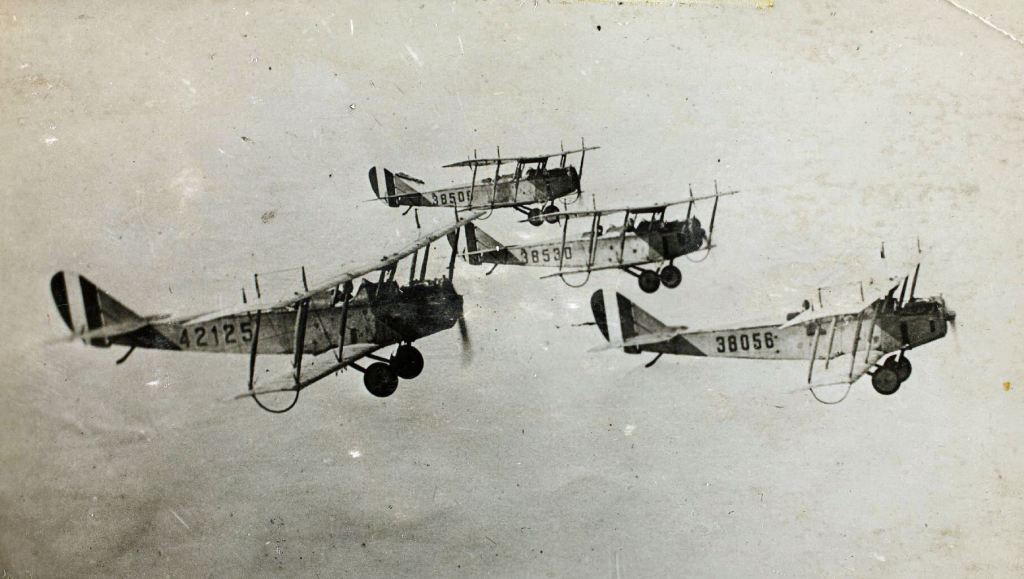
Curtiss JN-4 Training Flight
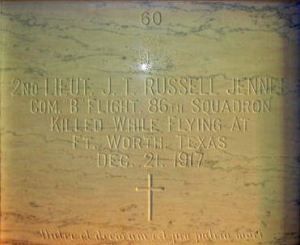
On 21 December 1917, while flying in a Curtiss JN-4 as part of a larger formation near Taliaferro Field No. 2, his aircraft, in which he was flying alone, was involved in a collision in cloud at about 500 feet with a second aircraft flown by Second Lieutenant J. T. R. Jenner and Cadet C. A. Baker. The two aircraft fell joined together, burying all three men underneath—Arthur Eden died from a fracture to the base of his skull.
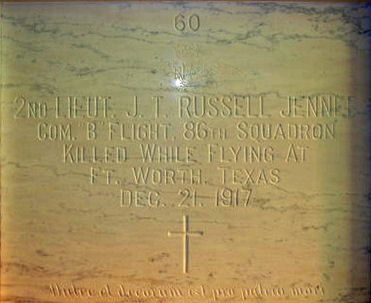
The panel on the burial chamber of Second Lieutenant J T R Jenner
Following a funeral service at Camp Taliaferro, Cadet Eden’s body was transported by rail back to Baltimore, accompanied by his cousin Cadet J E L Webster, who was also training at Camp Taliaferro.[3] His funeral service was held on 24 December 1917 in the Central Presbyterian Church in Baltimore, officiated by Reverend De Witt M. Benham, before his body was interred at Woodlawn Cemetery.[4] His grave is located in the eastern part of the cemetery in South Wesley East, Single ‘A’, Section 62, Range 3. Cadet Baker, a Canadian, is one of 11 men of the Royal Flying Corps buried at Greenwood Memorial Park, near Fort Worth. The body of Second Lieutenant Jenner, also a Canadian, was returned home; he is buried at Maple Leaf Cemetery in Chatham, Ontario.[5]
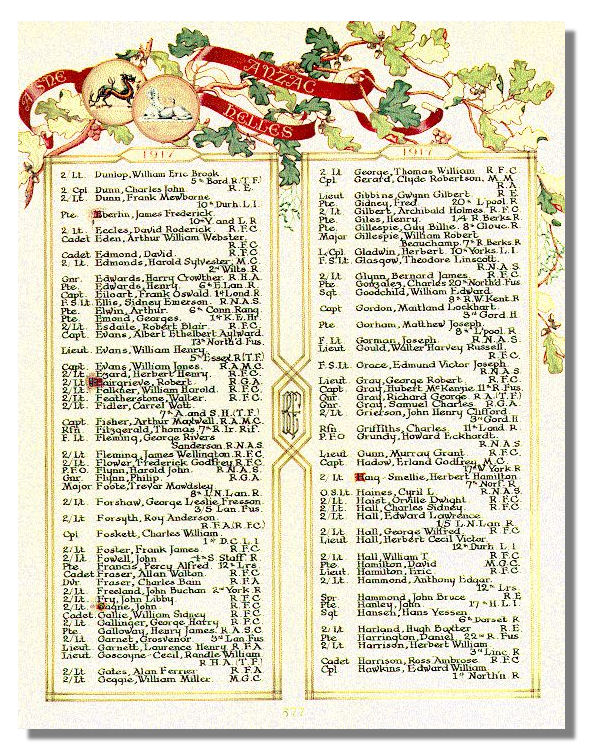
The Canadian Book of Remembrance showing the entry for Cadet Arthur Eden
Cadet Arthur William Webster Eden is commemorated on Page 577 of the Canadian First World War Book of Remembrance; that page is displayed on 14 December.
Cadet Arthur William Webster EdenCurtiss JN-4 Training FlightThe grave of Cadet Arthur William Webster EdenThe Canadian Book of Remembrance showing the entry for Cadet Arthur EdenThe panel on the burial chamber of Second Lieutenant J. T. R. JennerOswald Eden
1. (Back) Thirty-five men of the Royal Flying Corps and Royal Air Force died in aeroplane accidents while stationed at Camp Taliaferro—22 are buried in the United States and 13 are buried in Canada. In addition four men died from disease—three are buried in the United Sates and one in Canada. 2. (Back) William Thomas Eden (1861-before 1909) married Lillian Isabel (née Auld) (2 January 1867-19 Dec 1944) on 25 August 1886 in Kingston, Jamaica; Helen Isobel (8 January 1888-1903); Elizabeth Doris (1891-30 Jan 1892); Arthur Henry Webster Eden (28 December 1895-17 August 1896); May Lilian (21 July 1897-November 1971); and Oswald Archibald Kerrigan (24 January 1902-5 September 1983). 3. (Back) Cadet James Ernest Lelond ‘Erni’ Webster was born on 30 March 1897 at George Town in the Cayman Islands. He became a draughtsman in Baltimore before he enlisted into the Royal Flying Corps in September 1917 and joined No. 82 Canadian Training Squadron in No. 42 Wing at Camp Taliaferro. After the war he returned to work in Baltimore before moving to Jamaica. He died on 11 September 1975. 4. (Back) ‘Young Baltimore Flyer Who Was Buried Yesterday’. (3 January 1918). Baltimore Sun. p 4. 5. (Back) See: Cadet Cyril Albert Baker (biography not yet complete). Second Lieutenant John Thomas Russell Jenner (known as Russell) was born at Kingsville, Ontario on 13 January 1898, the youngest child and only son of John Earl Jenner MD, and Ella Eugenia (née Taylor). He enlisted into the Royal Flying Corps at Toronto on 29 May 1917 and was commissioned into the Royal Flying Corps on 1 September 1917. He was serving with ‘B’ Flight, No. 86 Canadian Training Squadron in No. 43 Wing when he was killed.
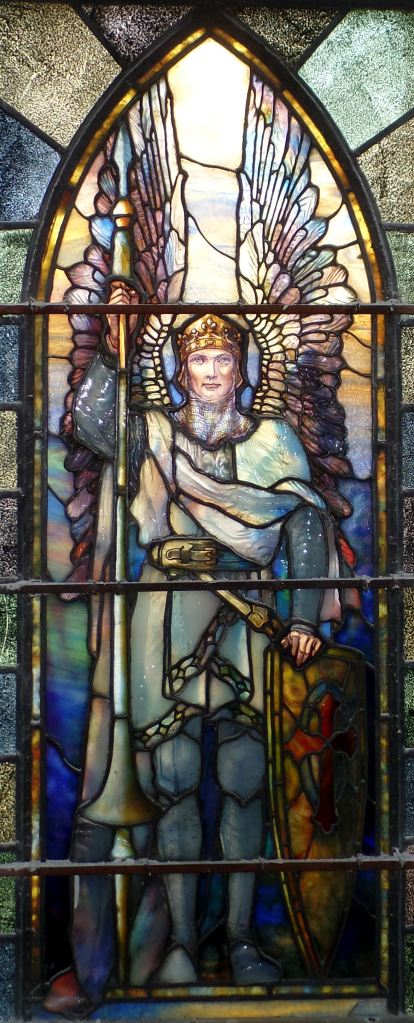
In Richmond, the state capital, one such window commemorates Cadet John Dunn, Royal Flying Corps, who died of scarlet fever on 26 March 1918, aged 20. When it was dedicated at All Saints’ Episcopal Church on 22 December 1918, it became the first war memorial to be placed in the city to commemorate a casualty of the First World War.



 Sacrifice