This is part of a series of essays about the First World War casualties commemorated by the Commonwealth War Graves Commission in New York.
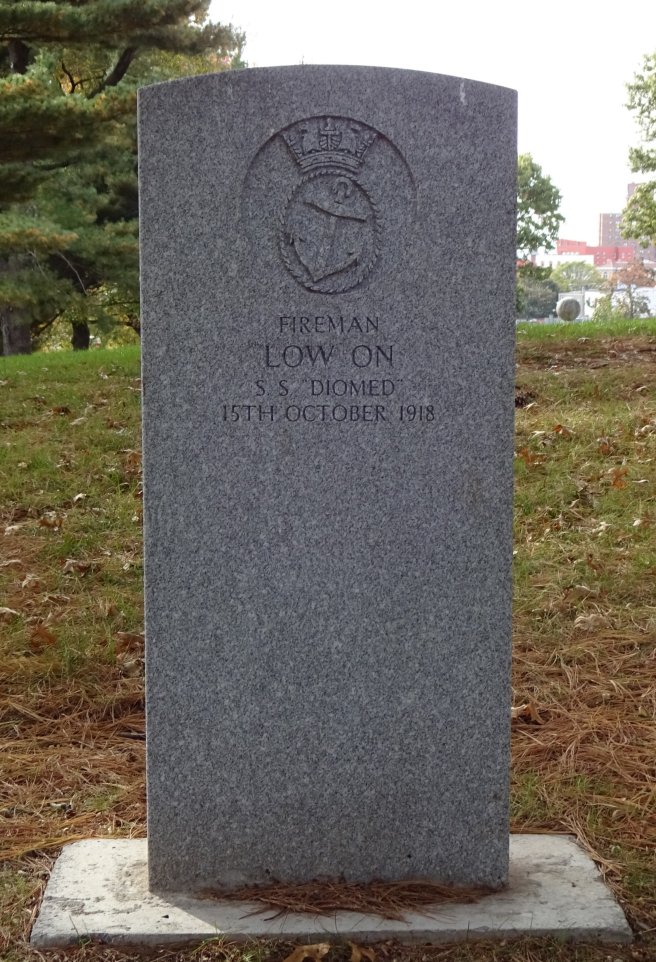
The grave of Fireman Low On
Fireman Low On[1] is one of the few casualties buried in the United States who died as a result of enemy action.
He was born in the mid-1880s in Guangdong province in southern China. There is no record of his early life or when he became a mariner but he signed on for service with SS Diomed in Hong Kong on 14 March 1918.
This is part of a series of essays about the First World War casualties commemorated by the Commonwealth War Graves Commission in New York.
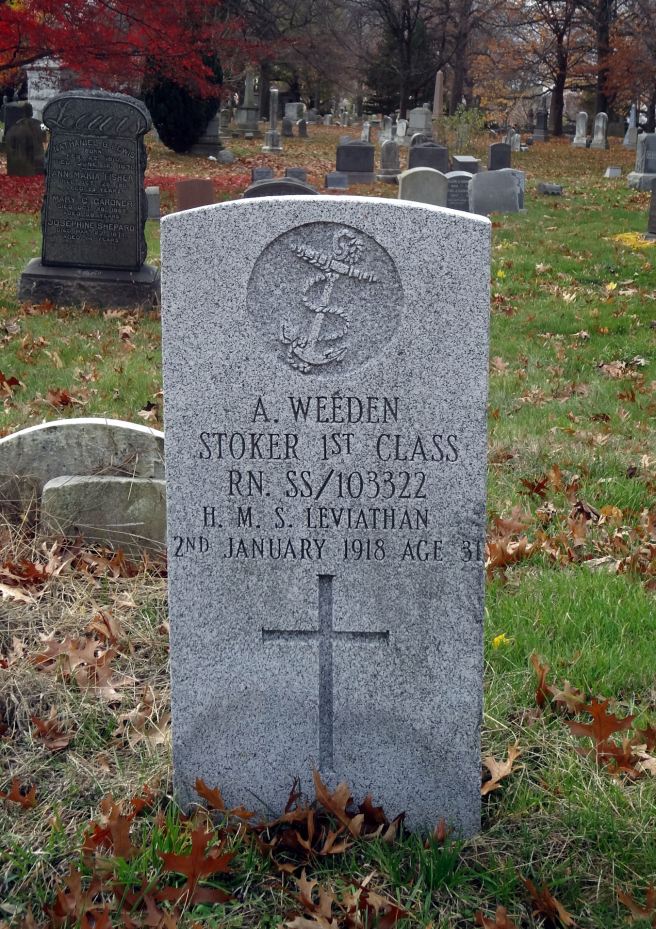
The grave of Stoker Alfred Weeden
Although recorded as being on the crew of HMS Leviathan, in fact, Stoker Weeden died in an accident in New York while serving in HMS Charybdis, which was undergoing conversion to a passenger and cargo carrier.
Alfred Weeden was born at Farnham in Surrey on 25 December 1884,[1] one of the twelve children of George and Mary Weeden.[2] When he left school he became a bricklayer’s labourer before he enlisted into the Royal Navy on 2 July 1906.[3]
After a period of training ashore and afloat at Portsmouth, Stoker Weeden joined the armoured cruiser HMS Drake. He remained in Drake, other than for periods of training ashore, until July 1909, when he was posted to various training establishments on the south coast. He transferred to the Royal Fleet Reserve on 2 July 1911.
This is part of a series of essays about the First World War casualties commemorated by the Commonwealth War Graves Commission in New York.
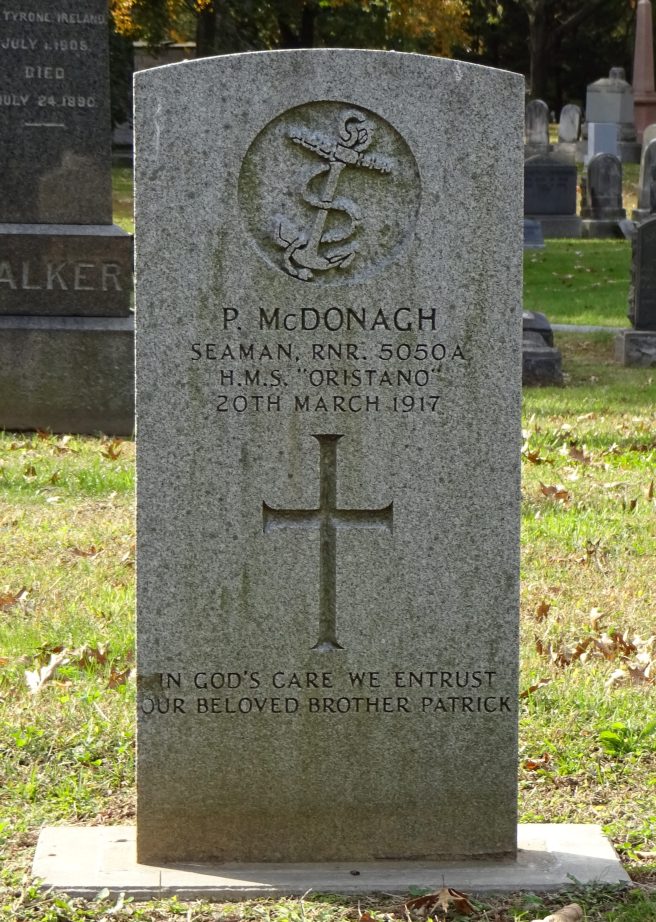
The Gravestone of Able Seaman Patrick McDonagh
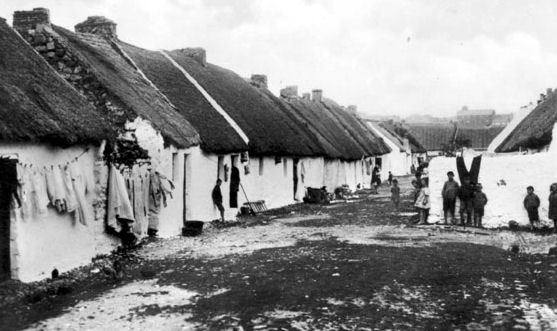
Patrick McDonagh (Padhraig MacConnachadh[1]) was born on 16 March 1895 in Claddagh, a fishing village on the western outskirts of Galway in Ireland. He was the fourth of the nine children of Thomas and Kate McDonagh, who lived at Rope Walk in the centre of the village.[2] His father was a stone mason but Patrick became a fisherman, like the majority of men in the village.
Claddagh in the early 20thC
He enrolled in the Royal Naval Reserve on 20 June 1913 and was allocated the number 5050A. Between August and November he underwent training at Portsmouth and in the gunnery training ships HMS Duncan and HMS Albemarle, and in the Home Fleet in the battleship HMS Bulwark. In the period before the war he returned to Galway, initially fishing as a crewman on the trawler Star of the Sea, before joining the liner SS Merion for a crossing to Philadelphia, and then the White Star liner SS Suevic for a journey to Australia between March and July 1914.
This is part of a series of essays about the First World War casualties commemorated by the Commonwealth War Graves Commission in New York.
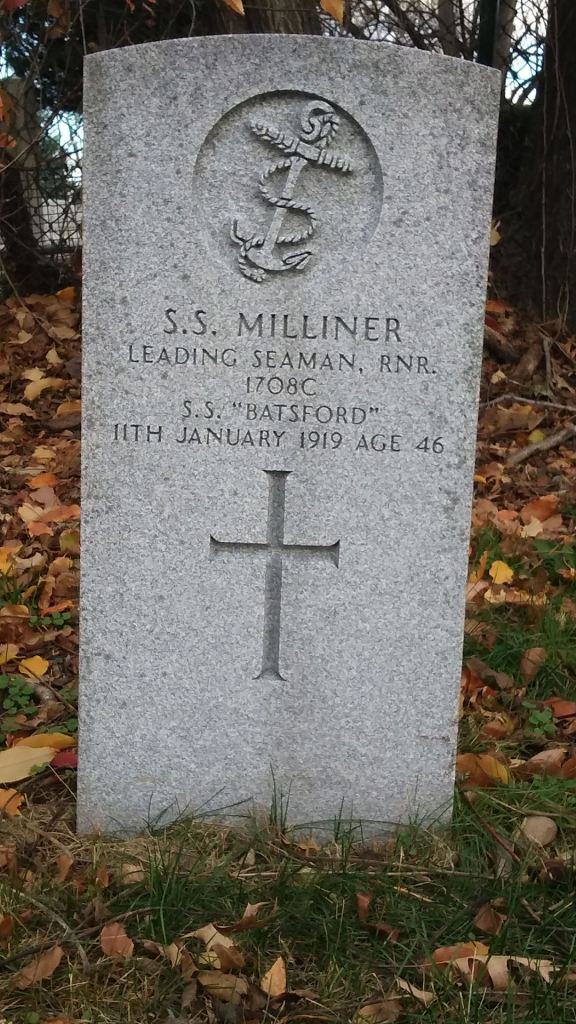
The grave of Leading Seaman Sydney Milliner
Sydney Stephen Milliner was born on 8 December 1873 at Sittingbourne in Kent, the son of Richard and Louisa Milliner. The couple had two daughters and three sons before Louisa died on 8 December 1879.[1] By then the family had moved to Sandwich. The younger children were brought up by their aunt Rosa, a widow who brought three children of her own into the family, and later had two more children with Richard.[2]
Milliner, who worked as a labourer, enrolled in Royal Naval Reserve on 1 June 1895; he was allocated the number 1708A.[3] Early in 1897, he married Matilda Foster Dray in Ramsgate and later that year their daughter, Jessie Florence, was born.[4] By the turn of the century the marriage had ended—his wife and daughter were living with his wife’s future husband, and Sydney Milliner was working for the North Eastern Railway on a dredger at Tyne Dock; he lived in South Shields.
This is part of a series of essays about the First World War casualties commemorated by the Commonwealth War Graves Commission in New York.
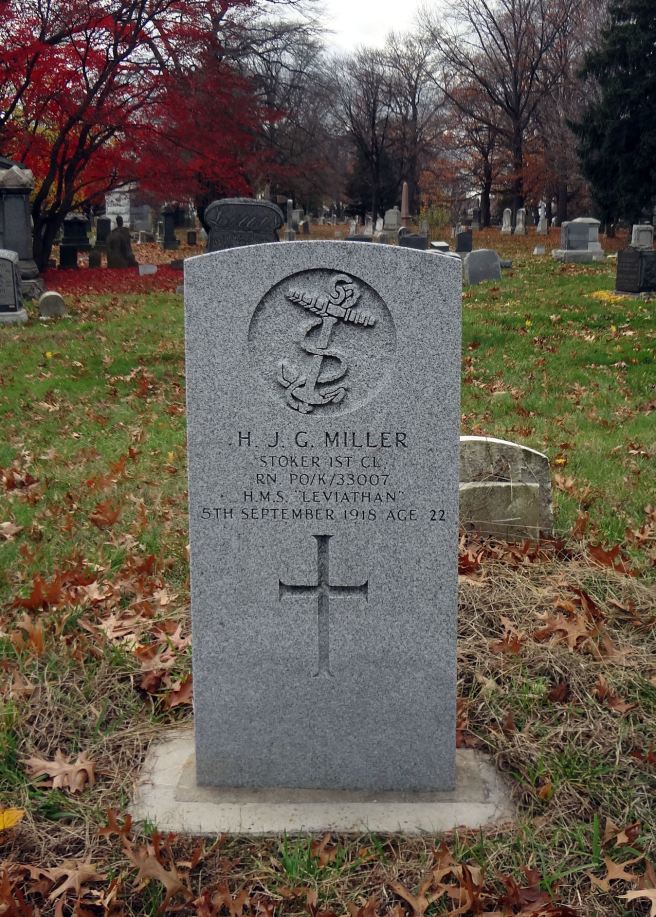
The grave of Stoker Henry John Gardner Miller
Henry John Gardner ‘Harry’ Miller was born on 27 May 1891 at Southsea in Hampshire, the son of George and Louisa Miller—he was one of 14 children.[1] His father worked as a shipwright and Harry worked as a milkman in Portsmouth. In 1912, he married Harriet Freeman.[2]
He enlisted into the Royal Navy at Portsmouth on 10 May 1916 and was allocated the number PO/K/33007. His training lasted until 30 August and he joined the crew of HMS Leviathan, then alongside at Greenock in Scotland. He was promoted to Stoker 1st Class on 19 April 1917.
This is part of a series of essays about the First World War casualties commemorated by the Commonwealth War Graves Commission in New York.
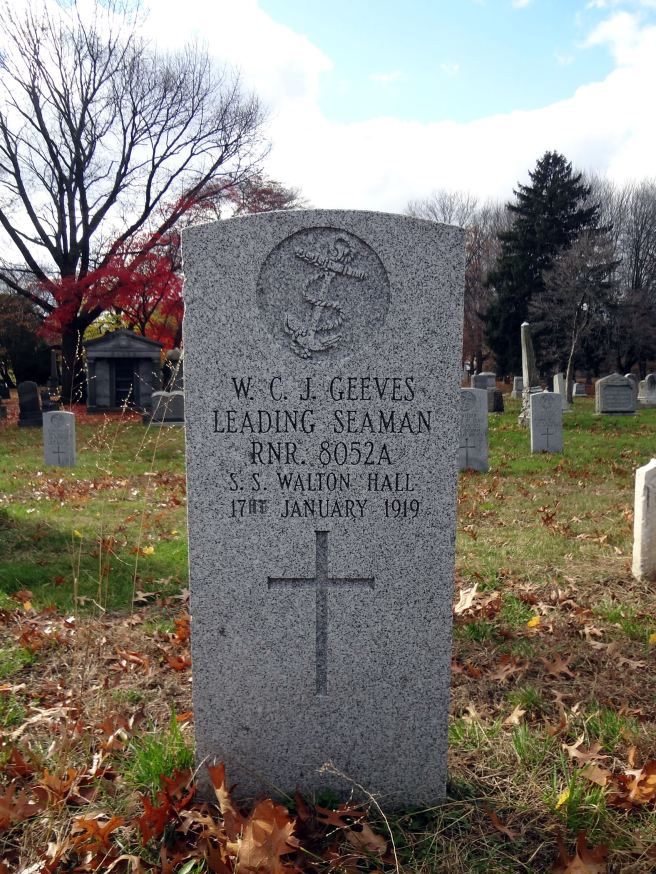
The grave of Leading Seaman William Charles John Geeves
Leading Seaman Geeves survived 3½ years as a gunner on defensively armed merchant ships, including the sinking of the cargo streamer SS Betty by U-61, only to succumb to influenza in New York.
William Charles John Geeves was born in London on 3 December 1889 the second son and second of the seven children of Charles and Eliza Geeves.[1] The family lived at New Beckton, Woolwich, where his father, who was born in Kingstown (now Dún Laoghaire) in Ireland, worked as a dock labourer. William Geeves became a merchant seaman.
On 15 April 1915, William Geeves enrolled in the Royal Naval Reserve and was allocated the number 8052A. After a period of training at HMS Pembroke in Chatham he joined SS Tuskar, a small, defensively armed cargo ship, on 19 May.
This essay is about the single First World War casualty commemorated by the Commonwealth War Graves Commission in Hawaii.
The grave of Engineer Sub-Lieutenant John Gemmell
Engineer Sub-Lieutenant John Gemmell is the most westerly of the First World War casualties commemorated by the Commonwealth War Graves Commission in the United States. He died of pneumonia in Hawaii and is buried in O’ahu Cemetery.
This is part of a series of essays about the First World War casualties commemorated by the Commonwealth War Graves Commission in Louisiana.
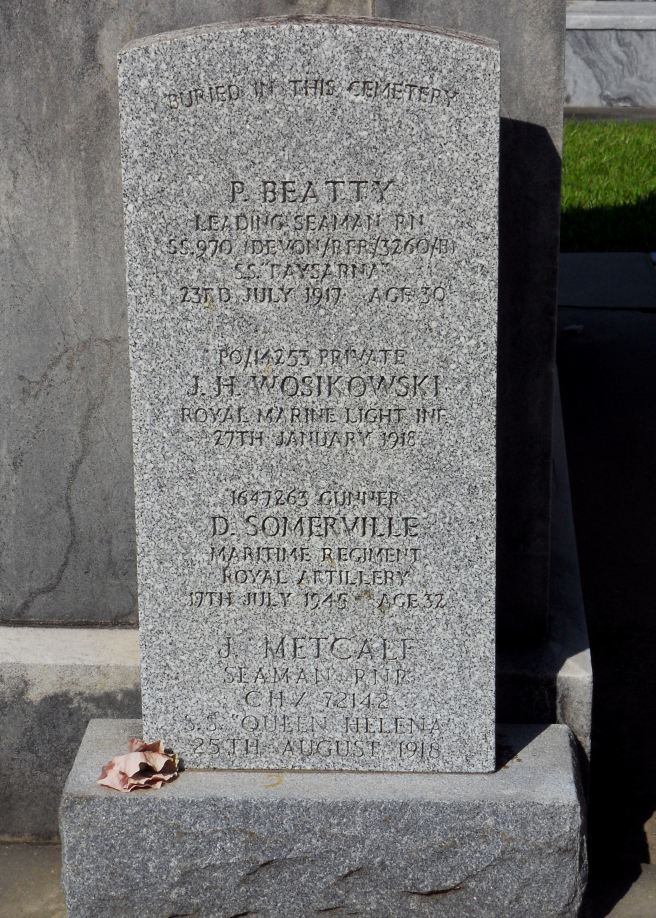
Editor’s Note: Some details about Leading Seaman Beatty were incorrectly recorded by the CWGC. His online record now reflects his correct date of death, service and ship and his gravestone will be replaced.
The war memorial at Chester Cathedral
When the war memorial was unveiled at Chester Cathedral on 24 May 1922, two mothers played a central role in the ceremony—Mrs Lydia Sheriff Roberts who had lost three sons in the war and Mrs Mary Beatty who had lost four.[1]
This is part of a series of essays about the First World War casualties commemorated by the Commonwealth War Graves Commission in Maryland.
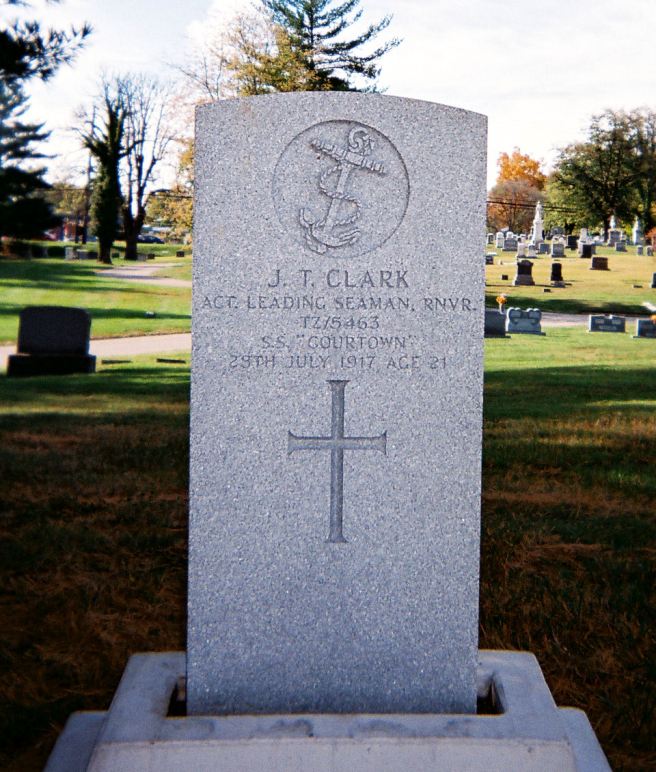
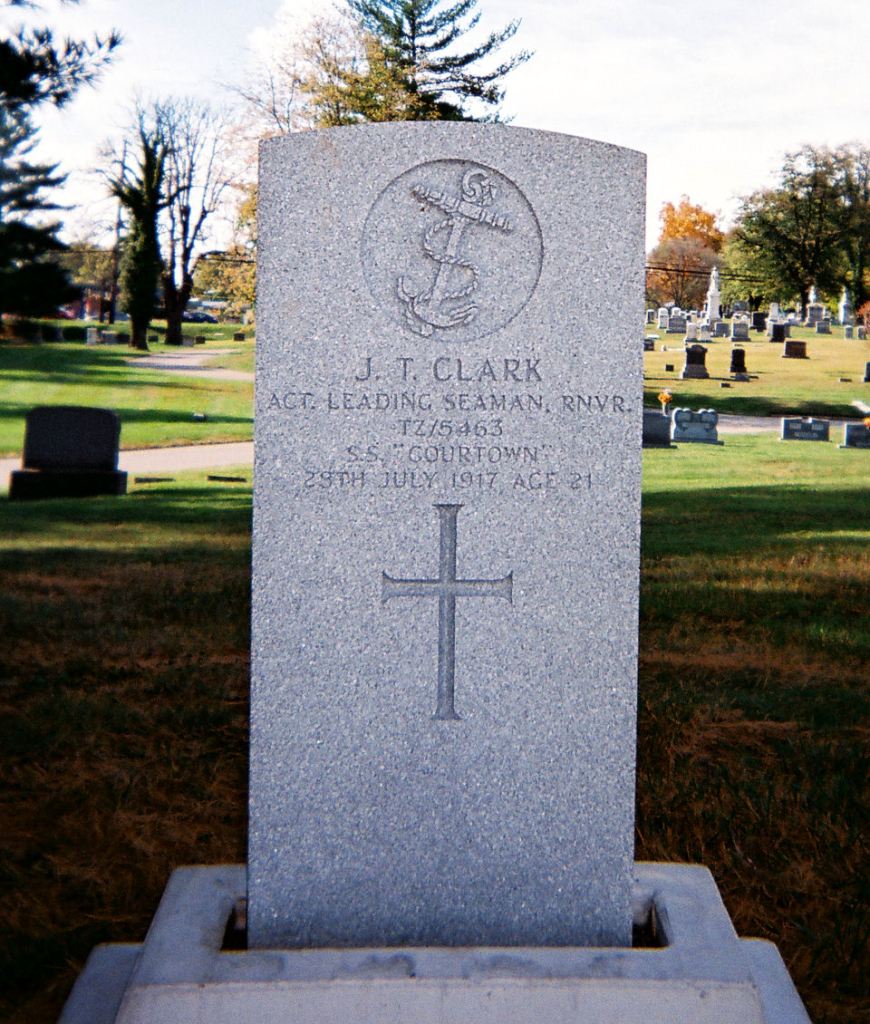
The grave of Leading Seaman Joseph Thompson Clark
Joseph Thompson Clark was nearby when HMS Natal blew up in Cromarty Firth in 1915, was present at the Battle of Jutland, and survived being torpedoed in the Mediterranean only to drown in a swimming accident in Baltimore harbour in 1917.
He was born on 26 August 1896 at Cowpen, near Blyth, an industrial town in Northumberland, one of the three children of Fergus and Mary Ann Clark.[1] His father had worked variously as a miner, a boiler fireman and as a crane driver. Joseph, like his older brother, worked in a sawmill.
Just after the outbreak of war, Clark enlisted on 21 August 1914 into the British Army at Newcastle-upon-Tyne (4903, Private) and joined the newly raised 8th (Service) Battalion, The Northumberland Fusiliers, the first of the New Army battalions raised for the Regiment. He falsely gave his age as 19. His early service was somewhat ill-disciplined and he was discharged on 30 October as ‘not being likely to become an efficient soldier’.[2]
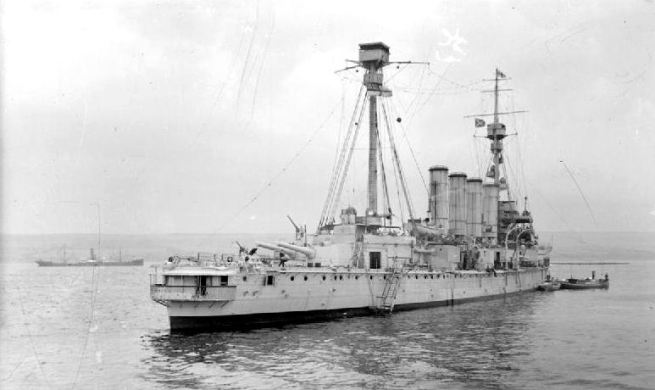
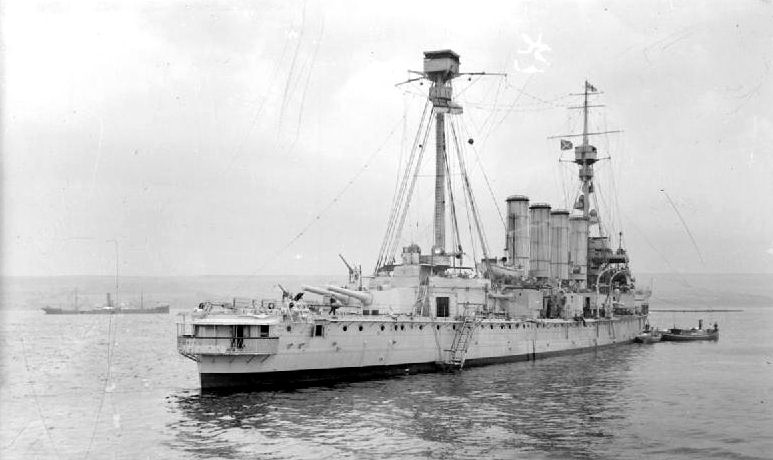
Clark then enlisted into the Royal Naval Volunteer Reserve on 23 June 1915, just before his 18th birthday—he again falsely stated his age, giving his birthday as 26 August 1895. He was allocated the number TZ/5463 and joined the training depot at Crystal Palace. After a period of training he joined HMS Shannon, a Minotaur-class armoured cruiser, on 30 September 1915. He was aboard her on 30 December 1915 when the armoured cruiser HMS Natal exploded nearby in Cromarty Firth with the loss of over 400 crew and civilian visitors—Shannon assisted in the rescue of the survivors.[3] Clark was also in HMS Shannon during the Battle of Jutland, although the ship did not see action that day.
HMS Shannon at Cromarty Firth, 1915
On 31 August 1916, Able Seaman Clerk reported for duty ashore for training as a gunner on defensively armed merchant ships; he completed this training on 9 November and, having found his niche, was appointed Acting Leading Seaman. When the story of Clark’s death appeared in the Baltimore Sun, it was reported that he had served on the SS Bretwalda, and had survived her sinking on 13 December 1916, when she was attacked by UB-43, 220 miles east of Malta on passage from Calcutta to Boulogne with a cargo of jute. It was reported that he spent several days adrift in a lifeboat before being picked up and taken to port in Italy. Soon after he joined the SS Courtown, a general cargo ship built in 1909.[4]
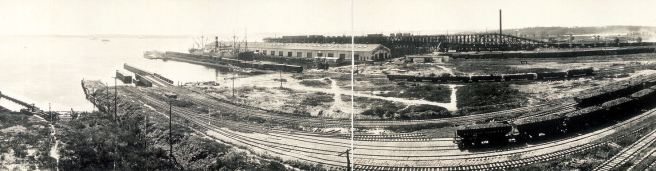
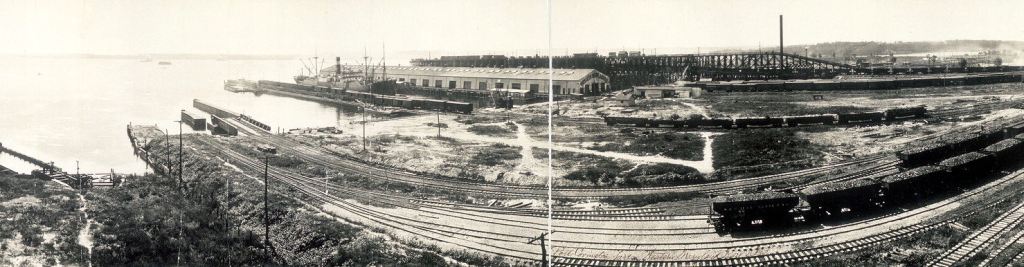
Acting Leading Seaman Clark arrived in the United States in July 1917 as the chief gunner on the Courtown, which berthed at the Western Maryland Railroad pier at Port Covington, Baltimore. On 28 July, after lunch he and his friends decided to go for a swim near the grain sheds. Clark could not swim and he wore a life-belt. He was accompanied by another gunner, Able Seaman Herbert Crawshaw,[5] and Radio Operator Cyril Matthews. Crawshaw had survived the explosion on HMS Natal—he was on the upper deck when the explosion occurred—and had trained as a gunner with Clark, completing his training on the same day; he too had served in SS Bretwalda before joining the Courtown.
Port Covington, Western Maryland Railroad Yards, 1913
Clark decided that he had had enough practice with the life-belt and took it off to try and swim without it. Crawshaw swam to him to give assistance if needed but, before he could reach his friend, Clark disappeared under the water. Crawshaw tried to grab him and felt him tug at his body but he did not return to the surface. The other men dived to try and find Clark but they were unsuccessful. Having told the ship’s Master about the accident, the police were informed and the police boat Lannan was dispatched to drag for the body; it was found a few hours later. The coroner, Otto M. Bernhard, recorded a finding of accidental drowning.[6]
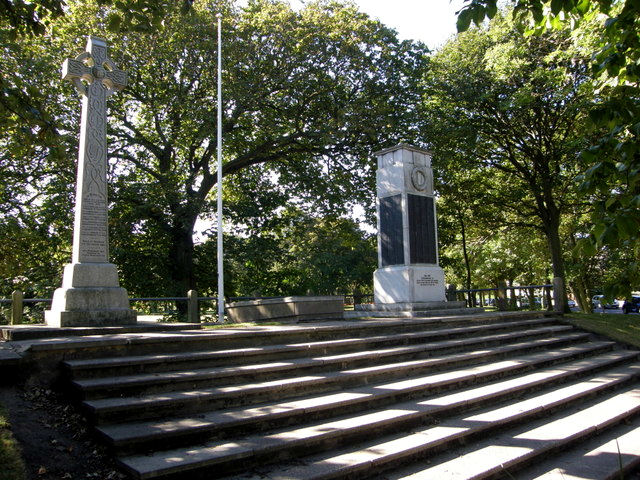
Acting Leading Seaman Joseph Thompson Clark was buried in Cedar Hill Cemetery, Baltimore, on 30 July 1917.[7] He is commemorated there by a Commonwealth War Graves Commission headstone. He is also commemorated on the Blyth war memorial.
Blyth War Memorial – the First World War memorial is on the right, the Boer War memorial is on the left
His medals group comprises: British War Medal 1914-20, and Victory Medal.
The grave of Acting Leading Seaman Joseph Thompson ClarkHMS Shannon at Cromarty Firth, 1915Port Covington, Western Maryland Railroad Yards, 1913Blyth War Memorial – the First World War memorial is on the right, the Boer War memorial is on the left
1. (Back) Fergus Clark (1863-1936) married Mary Ann Shirran (1867-NK) in 1885; James (1886-NK); and Isabella (1894-NK). Another sibling died in childhood. 2. (Back) His offences, mostly relatively minor, included absence overnight, gambling in barracks, smoking in the ranks, making an improper remark to an officer, talking in the ranks, and breaking out of detention while undergoing punishment. At this stage of the war, the Army could be selective with recruiting and Clark was discharged under King’s Regulation 392(iii)c: ‘Recruit within three months of enlistment considered unfit for service’. 3. (Back) A full account of the disaster may be found here: HMS Natal. 4. (Back) ‘Naval Gunner Drowned’. (29 July 1917). Baltimore Sun. p 14. This article contains a number of facts about Clerk’s service but it is evident when comparing it to his service record that they have been mixed up when recounted. 5. (Back) Able Seaman Herbert Wentworth Crawshaw was born on 9 July 1898 at Mirfield, Yorkshire. Prior to the war he worked as a miner. He enlisted on 15 March 1915 (numbered TZ/3981). Like Clark, he was underage and give his birthday as 9 July 1896. His career paralleled Clark’s and after his period on defensively armed merchant ships he served for the last nine months of the war in Gibraltar. He was demobilized on 1 May 1919. He died in Yorkshire in 1959. 6. (Back) Death Certificate. (30 July 1917). Health Department, City of Baltimore. Certificate number D7149. The certificate shows his name as ‘Joseph L. Clark’. 7. (Back) Plot E, Lot 172, Grave 11. The cemetery register incorrectly records his name as ‘James L. Clark’.



 Sacrifice